
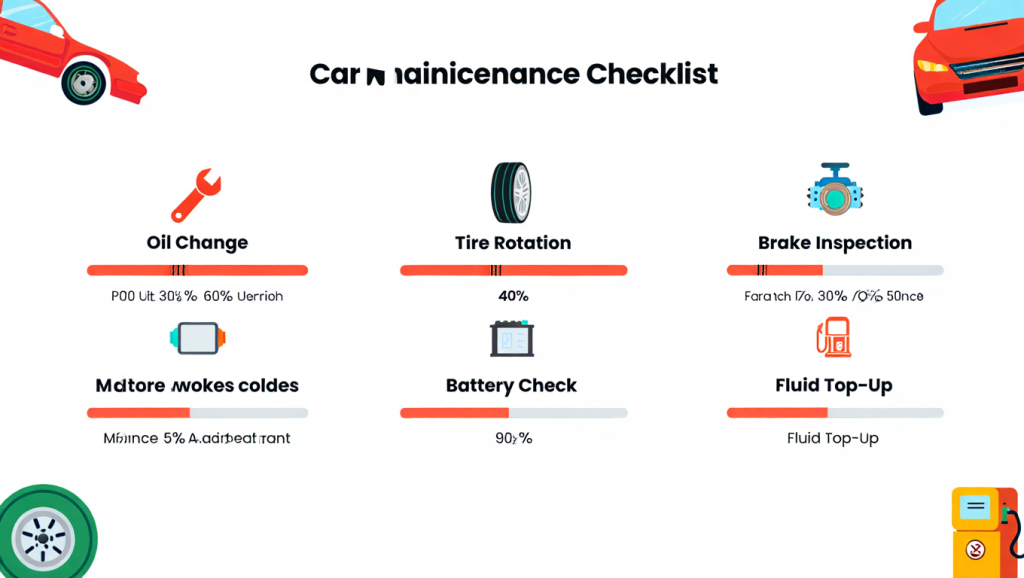
Owning a car comes with more responsibility than simply filling the gas tank and driving. To keep your vehicle safe, efficient, and reliable, you need to stick to a regular maintenance schedule. Preventive care not only extends the lifespan of your car but also helps you avoid expensive repairs and dangerous breakdowns.
This article provides a clear checklist of what to inspect and service monthly, quarterly, and yearly, along with long-term milestones. Whether you’re driving a Toyota Corolla, Ford F-150, or a Honda Civic, these steps will help you keep your vehicle running like new.
Why a Car Maintenance Checklist Matters?
It’s easy to put off maintenance when your car seems to be running fine. But hidden issues like low fluids, worn brake pads, or a weak battery can quickly escalate into major problems.
- Safety: Regular checks ensure your brakes, lights, and tires are in top condition, reducing accident risk.
- Savings: Preventive maintenance costs far less than unexpected repairs. For example, replacing brake pads costs $150–$300, while waiting until the rotors are damaged can cost $600–$1,000.
- Longevity: Engines, transmissions, and suspension systems last longer when serviced on time.
OEMs (Original Equipment Manufacturers) design maintenance schedules for optimal performance. While some aftermarket guides suggest shortcuts, sticking to OEM recommendations keeps warranties valid and ensures reliability.
Monthly Car Maintenance Checklist
Monthly maintenance is about quick, simple checks you can do at home. Spending 10–15 minutes each month can save you from costly headaches later.
Check Engine Oil and Coolant Levels

Engine oil is the lifeblood of your car. Use the dipstick to check oil levels and color. Fresh oil should be amber; if it’s dark or gritty, it’s time for a change. Low oil levels can cause severe engine damage.
Coolant prevents overheating. Pop the hood and check the reservoir—levels should be between the minimum and maximum lines. Low coolant may indicate a leak, which needs immediate attention.
Pro Tip: Always use the oil and coolant grade recommended in your owner’s manual. For instance, many Toyotas require 0W-20 synthetic oil. Using the wrong viscosity can reduce efficiency.
Tire Pressure and Tread Inspection
Properly inflated tires improve safety, fuel efficiency, and ride comfort. Use a tire pressure gauge to check PSI monthly. Most vehicles list the recommended PSI on the driver’s door jamb sticker.
- Underinflated tires: Increase rolling resistance, reduce MPG, and wear out faster.
- Overinflated tires: Reduce traction and cause uneven wear.
Check tread depth using a penny test—if you can see Lincoln’s head, it’s time for new tires. Uneven tread can signal alignment issues.
Lights and Indicators
A burned-out headlight or brake light isn’t just an inconvenience—it’s a safety hazard and could earn you a ticket. Once a month, turn on all lights (headlights, high beams, turn signals, brake lights, reverse lights) and confirm they’re working.
Replacing bulbs is often DIY-friendly. A standard halogen bulb costs $15–$30, while LED replacements can cost $50–$100 but last longer.
Windshield Washer Fluid and Wipers
Visibility is crucial, especially in bad weather. Top off washer fluid monthly. Check wiper blades for cracks, streaks, or skipping. Most wipers last 6–12 months. Replacements cost $20–$40 per pair.
Quarterly Car Maintenance Checklist (Every 3 Months)
Every season, it’s wise to perform deeper checks that go beyond fluids and lights. These prevent mid-drive failures and keep your car performing smoothly.
Battery Health and Terminals
Car batteries typically last 3–5 years. Every three months, inspect battery terminals for corrosion (white or green buildup). Corrosion reduces electrical flow, causing starting issues.
Use a wire brush to clean terminals, and coat them with petroleum jelly to prevent buildup. If you own a multimeter, check voltage—healthy batteries should read 12.6 volts or more. Anything below 12.2 volts signals weakness.
Cost Check: Replacing a battery costs $120–$250 depending on brand. Ignoring signs may leave you stranded, requiring a tow.
Brake Pads and Fluid
Brakes are one of the most critical safety systems. Every three months:
- Listen for squealing or grinding sounds (worn pads).
- Check fluid levels in the brake master cylinder. Fluid should be clear or light amber. Dark fluid means contamination and requires flushing.
OEM brake pads typically last 30,000–70,000 miles, while aftermarket pads vary. Waiting too long to replace pads can damage rotors, tripling repair costs.
Cabin Air Filter and Engine Air Filter
The cabin filter cleans the air entering your vehicle’s interior. If you notice weak airflow or unpleasant odors, it’s time to replace it. Most need replacement every 12,000–15,000 miles, but quarterly inspections ensure you catch clogging early.
The engine air filter ensures clean airflow for combustion. A clogged filter reduces fuel efficiency and power. Inspect quarterly and replace if dirty. A filter costs $15–$40 and can improve MPG by up to 10%.
Fluid Checks (Transmission, Power Steering, Coolant)
Beyond oil and coolant, check these quarterly:
- Transmission Fluid: Should be red or pink. Brown or burnt-smelling fluid means it’s overdue for a change.
- Power Steering Fluid: Low levels cause heavy steering.
- Coolant: Even if levels are fine, check color. Rusty or cloudy coolant signals contamination.
Yearly Car Maintenance Checklist
Annual maintenance digs deeper into your car’s core systems. These tasks usually require more time or professional service but are crucial for long-term reliability.
Professional Wheel Alignment and Balancing
Wheel alignment ensures your tires meet the road at the correct angles. Misalignment causes uneven tire wear, pulling, and reduced fuel efficiency. Balancing distributes tire weight evenly, preventing vibrations.
- Signs You Need It: Car pulls to one side, uneven tread, or shaking at highway speeds.
- Cost: $75–$150 for alignment; $50–$100 for balancing.
- Savings: Extends tire life by thousands of miles, saving $400–$800 on premature replacements.
Full Brake Inspection
While you may check pads quarterly, an annual inspection digs into rotors, calipers, brake hoses, and ABS sensors.
- Rotors: Warped rotors cause vibration when braking.
- Calipers: Sticking calipers wear pads unevenly
- ABS Check: Ensures sensors and wiring are intact.
Pro Tip: Replacing rotors early ($300–$500 for all four) is cheaper than waiting until they damage calipers or ABS components.
Spark Plugs and Ignition System
Spark plugs ignite the fuel-air mixture. Over time, they wear out, causing misfires, poor acceleration, and higher fuel consumption.
- Lifespan:
- Copper plugs: 20,000–30,000 miles.
- Platinum: 60,000 miles.
- Iridium: 80,000–100,000 miles.
- Copper plugs: 20,000–30,000 miles.
- Symptoms of Wear: Hard starts, rough idle, reduced MPG.
Replacing spark plugs costs $100–$300 depending on your vehicle. DIY is possible but requires care not to overtighten.
Exhaust and Emission System Check
Exhaust leaks are dangerous, letting harmful gases into the cabin. Annual inspections catch issues like:
- Cracked manifolds.
- Rusted mufflers.
- Failing catalytic converters.
OEM vs. Aftermarket: OEM catalytic converters cost $900–$2,500, but last longer and meet emission laws. Cheap aftermarket versions ($300–$600) often fail sooner and may not pass inspection.
Comprehensive Fluid Flushes
- Coolant Flush: Every 2–3 years. Prevents overheating and corrosion.
- Brake Fluid Flush: Every 2–3 years. Old fluid absorbs moisture, reducing braking power.
- Transmission Fluid Change/Flush: Every 30,000–60,000 miles depending on vehicle. Prevents costly transmission failure.
Long-Term Maintenance Milestones
Beyond yearly maintenance, certain milestones require major part replacements.
- 30,000 miles: Replace air filter and cabin air filter. Inspect brakes thoroughly.
- 60,000 miles: Replace spark plugs, flush brake fluid, inspect belts and hoses.
- 90,000–100,000 miles: Replace timing belt (if equipped) and water pump. Failure of a timing belt can destroy your engine—costing $2,000–$5,000 in repairs.
- 120,000 miles: Inspect suspension components (struts, shocks, bushings).
Pro Tip: Some Toyota and Honda models use timing chains instead of belts. Chains often last 150,000+ miles but require good oil quality to avoid stretching.
Common Mistakes Drivers Make with Car Maintenance
Many car owners unintentionally shorten their vehicle’s life by skipping or mishandling maintenance.
Skipping Oil Changes
Old oil leads to sludge buildup, friction, and eventual engine failure. Delaying a $70 oil change can result in a $5,000 engine replacement.
Ignoring Warning Lights
Dashboard lights like “Check Engine” or “ABS” shouldn’t be ignored. They often indicate small issues that can turn into major failures if left untreated.
Using Wrong Fluids
Mixing the wrong coolant or transmission fluid type can damage seals and components. Always follow the manual or OEM specs.
Relying Only on Mileage
Conditions matter. Stop-and-go city driving, extreme heat/cold, or towing shorten maintenance intervals. Don’t rely solely on mileage—consider your driving habits.
DIY vs. Professional Maintenance
Not all tasks require a mechanic. Knowing what you can handle at home saves money, while recognizing when to call a pro prevents mistakes.
DIY-Friendly Tasks
- Oil changes (if you have tools and disposal plan).
- Air filter and cabin filter replacements.
- Tire pressure checks and topping fluids.
- Replacing wiper blades or light bulbs.
Savings: A DIY oil change costs ~$35 compared to $70–$120 at a shop.
Professional Tasks
- Timing belt/chain replacements.
- Brake fluid flushes.
- Transmission service.
- Suspension repairs.
Why? These require special tools, training, and safety precautions. Mistakes can cause accidents or destroy expensive components.
Final Thoughts
Sticking to a monthly, quarterly, and yearly maintenance checklist is the best way to ensure your car stays safe, reliable, and efficient. Small monthly checks like tire pressure and oil levels prevent breakdowns, quarterly inspections catch issues early, and yearly services keep major systems healthy.
By balancing DIY care with professional service, you’ll save money, extend your car’s lifespan, and avoid stressful roadside breakdowns. Print this checklist, set reminders, and make maintenance part of your driving routine. Your car—and your wallet—will thank you.
FAQs
- How often should I check my tire pressure?
Check monthly and before long trips. Proper tire pressure improves safety, fuel efficiency, and tire lifespan. - Is synthetic oil really better than conventional?
Yes, synthetic oil resists breakdown longer, performs better in extreme temperatures, and often allows longer intervals between oil changes. - What fluids should I check most often?
Engine oil, coolant, and washer fluid should be checked monthly. Transmission and brake fluids can be inspected quarterly or yearly depending on usage. - Do I need to replace spark plugs at the dealer?
No. Independent shops or DIY replacements work fine if OEM-spec plugs are used. Dealers may charge more for labor. - How much should yearly maintenance cost on average?
Expect $400–$700 annually for routine maintenance on most vehicles. Luxury or high-performance models may run $1,000+. Preventive care is far cheaper than unexpected repairs.

Benjamin Grey is an automotive engineer and writer at Car Parts Advisor. With years of experience in the automotive industry, he shares expert advice on car parts, maintenance, and repairs to help car owners keep their vehicles running smoothly.