
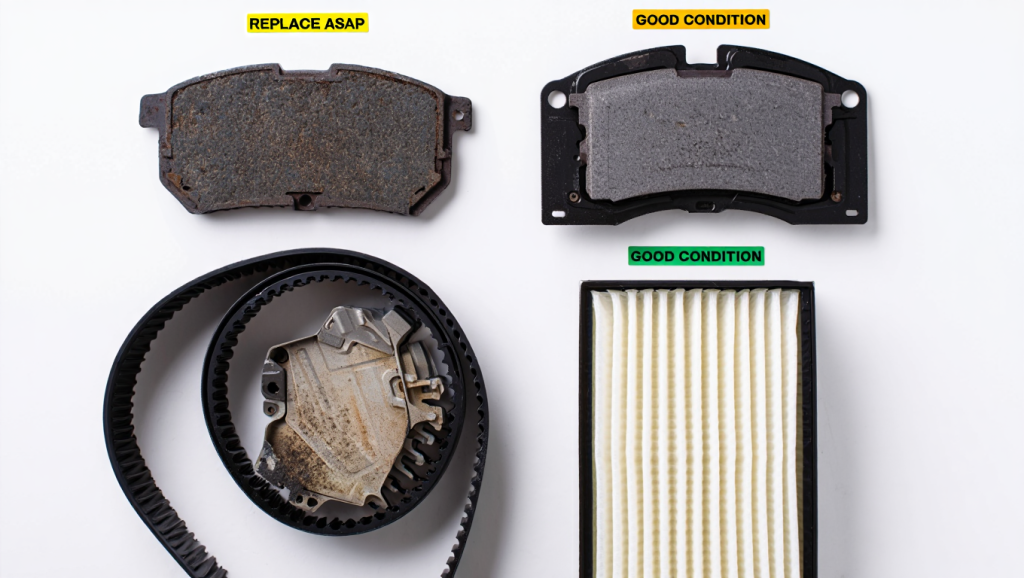
Your car is made up of hundreds of components, but some are far more critical than others. Delaying the replacement of worn or failing parts can lead to accidents, costly repairs, and even complete engine failure.
Many car owners put off maintenance to save money, but the truth is, ignoring a small $50 replacement can turn into a $3,000 repair bill. By staying proactive and replacing critical components on time, you not only protect your safety but also extend your vehicle’s lifespan and improve fuel efficiency.
In this guide, I’ll walk you through the top seven car parts you should never ignore, how to spot when they need replacement, and cost-effective tips for maintaining your vehicle.
-
Brake Pads and Rotors
Brakes are arguably the most important safety system in your vehicle. Worn brake pads or damaged rotors reduce stopping power, increase accident risk, and can lead to expensive repairs.
Signs They Need Replacing
- Squealing or Grinding: A high-pitched squeal usually indicates worn pads, while grinding suggests metal-on-metal contact with the rotors.
- Vibration or Pulsation: Uneven rotor wear can cause the brake pedal to pulsate when stopping.
- Reduced Responsiveness: If your car takes longer to stop, pads may be thinning.
Cost vs. Safety:
- Brake Pads: $150–$250 per axle
- Rotors: $400–$1,200 per axle if damaged
OEM vs. Aftermarket: OEM brake pads offer reliable stopping performance and longevity. High-quality aftermarket pads may provide enhanced stopping power or better wear resistance at a lower cost, but avoid ultra-cheap pads—they can damage rotors prematurely.
Pro Tip: Inspect brake pads visually through wheel spokes or during tire rotations. Replacing pads in pairs (front or rear) ensures balanced braking.
-
Tires
Tires are your car’s only contact with the road. Driving on worn or damaged tires increases the risk of blowouts, poor handling, and reduced fuel efficiency.
Tread Depth and Wear
- Minimum tread depth for safety is 4/32” for front tires and 2/32” for rear tires.
- Uneven wear may indicate suspension or alignment issues.
DIY Check: Use the penny test: insert a penny into the tread with Lincoln’s head upside down. If you see all of Lincoln’s head, it’s time to replace the tire.
Cost Considerations
Replacing tires proactively prevents damage to alignment or suspension components, which could cost hundreds more.
OEM vs. Aftermarket: OEM tires are designed specifically for your vehicle and balance performance and longevity. Quality aftermarket brands offer comparable durability at lower cost, but avoid extremely cheap tires, which may wear unevenly or fail faster.
Pro Tip: Rotate tires every 5,000–7,500 miles and check air pressure monthly to maximize tire life and fuel efficiency.
-
Battery
A failing battery can leave you stranded in inconvenient or dangerous situations. Timely replacement is inexpensive compared to towing and electrical system damage.

Signs of a Weak Battery
- Slow engine crank or difficulty starting
- Dim headlights or interior lights
- Corrosion on terminals or swelling
OEM vs. Aftermarket: OEM batteries fit your vehicle perfectly and meet manufacturer specifications. Quality aftermarket batteries may offer higher cold cranking amps (CCA) and often cost less. Low-quality batteries may fail quickly, leaving you with repeated replacements.
Maintenance Tips:
- Clean terminals regularly
- Check voltage monthly (12.4V or higher is healthy)
- Secure connections tightly
Cost: $100–$200 for a typical battery replacement; emergency towing or replacement can exceed $300.
-
Engine Air Filter
The engine air filter prevents dirt and debris from entering the engine. A clogged filter reduces fuel efficiency, decreases acceleration, and can increase engine wear.
Symptoms of a Dirty Air Filter
- Reduced acceleration or sluggish engine response
- Black smoke from the exhaust
- Poor fuel economy
Replacement Cost: $20–$50 for most vehicles. DIY replacement is quick, often under 10 minutes, and saves on labor costs.
OEM vs. Aftermarket: OEM filters meet your vehicle’s specifications, ensuring proper fit and airflow. High-quality aftermarket filters may improve airflow slightly, boosting performance and MPG, but extremely cheap filters may let debris into your engine, causing long-term damage.
Pro Tip: Check your air filter every 10,000–15,000 miles or more often in dusty environments. Replacing it regularly keeps your engine healthy and fuel-efficient.
-
Spark Plugs
Intro: Spark plugs are essential for proper combustion in your engine. Worn plugs can lead to misfires, reduced fuel efficiency, and rough engine operation. Replacing them on schedule is inexpensive compared to the damage caused by neglect.
Symptoms of Worn Spark Plugs
- Engine misfires or rough idling
- Difficulty starting the vehicle
- Decreased fuel economy
- Engine hesitation during acceleration
Cost Considerations: A full set of spark plugs typically costs $50–$150 depending on the type (copper, platinum, iridium). Delaying replacement can damage the catalytic converter, which may cost $1,000–$2,500 to replace.
OEM vs. Aftermarket: OEM spark plugs are designed for optimal performance and longevity. High-quality aftermarket plugs, like iridium or platinum types, can last longer and sometimes improve fuel efficiency. Avoid cheap generic plugs, which wear quickly and can affect engine performance.
Maintenance Tip: Replace spark plugs according to your manufacturer’s schedule—usually every 30,000–100,000 miles depending on type.
-
Timing Belt/Chain
The timing belt or chain synchronizes your engine’s camshaft and crankshaft. Failure can cause catastrophic engine damage, including bent valves or total engine failure.
Replacement Intervals
- Timing belts typically require replacement every 60,000–100,000 miles.
- Timing chains last longer but may still require inspection for wear or tension issues.
Cost vs. Catastrophic Failure
- Replacement cost: $300–$800
- Engine rebuild if belt/chain fails: $3,000+
Signs of Wear:
- Squeaking or rattling noises from the engine
- Engine misfires or rough running
- Oil leaks near the timing cover
OEM vs. Aftermarket: OEM belts ensure proper fit and performance, while high-quality aftermarket belts or chains can be cost-effective. Avoid budget belts, which may fail prematurely.
Pro Tip: If your vehicle has a timing belt, replace the water pump simultaneously—it’s often accessible during the same service and prevents future labor costs.
-
Brake Fluid and Coolant
Brake fluid and coolant are critical for safety and engine health. Contaminated or low fluids can reduce system efficiency and lead to expensive repairs.
Brake Fluid
- Absorbs moisture over time, reducing braking performance
- Monthly checks prevent unexpected failure
- Flush every 2–3 years depending on manufacturer
Coolant
- Maintains engine temperature and prevents freezing in winter
- Check levels monthly and inspect for leaks
- Flush and replace per manufacturer schedule
Cost vs. Neglect:
- Brake fluid flush: $50–$100
- Coolant flush: $50–$100
- Engine or brake system damage from neglect: $500–$3,000
Pro Tip: Look for dark or sludgy fluids, leaks under the vehicle, or overheating. Preventive maintenance is inexpensive but protects major systems.
Final Thoughts
Replacing critical car parts on time is about safety, reliability, and cost savings. Brake pads, tires, battery, air filter, spark plugs, timing belt, and fluids are not optional—they are essential for preventing accidents and avoiding expensive repairs.
By following manufacturer recommendations and performing monthly or scheduled inspections, you maintain optimal performance, fuel efficiency, and vehicle longevity. Keep a replacement checklist, choose quality OEM or aftermarket parts, and stay proactive—your car and wallet will thank you.
FAQs
How often should I replace these parts?
Replacement intervals vary by part: brake pads (30,000–70,000 miles), spark plugs (30,000–100,000 miles), timing belt (60,000–100,000 miles), and fluids per manufacturer guidelines. Check your owner’s manual.
Can I do some replacements myself?
Yes. Air filters, spark plugs, and brake pads can often be replaced DIY with basic tools. Tires, timing belts, and fluid flushes may require a certified mechanic.
Are aftermarket parts reliable?
High-quality aftermarket parts can match or exceed OEM performance and often cost less. Avoid extremely cheap options, which may fail prematurely and increase repair costs.
What happens if I ignore a timing belt?
Failure of a timing belt can cause catastrophic engine damage, including bent valves or a complete engine rebuild, costing thousands. Never delay its replacement.
How do I know my brake pads are worn?
Listen for squealing or grinding, feel for vibration in the pedal, and inspect visually. Pads should be replaced before they wear down completely to avoid rotor damage.

Benjamin Grey is an automotive engineer and writer at Car Parts Advisor. With years of experience in the automotive industry, he shares expert advice on car parts, maintenance, and repairs to help car owners keep their vehicles running smoothly.