

If you own a Toyota Corolla, you may have heard the terms brake pads and brake shoes, but do you know the difference? Understanding how each works is crucial for maintaining safe and efficient braking. While both are part of your vehicle’s braking system, they serve different purposes, operate differently, and are designed for different brake types.
Choosing the right component for your Corolla impacts stopping performance, maintenance costs, and long-term safety. In this guide, we’ll explain the difference between brake pads and brake shoes, discuss their materials, costs, maintenance, and lifespan, and help you determine which is best for your Corolla.
Why Understanding Brake Pads and Shoes Matters?
Knowing the difference ensures you select the correct replacement parts, maintain safety, and avoid costly mistakes.
The Role of Brake Pads and Shoes in Braking
Brake pads are used in disc brake systems, which are standard on the front wheels of modern Corollas and often on all four wheels in newer models. Brake shoes, in contrast, are used in drum brakes, typically on the rear wheels of older or base-model Corollas. Both convert kinetic energy into friction to stop the car.
How Component Choice Affects Performance
Brake pads provide quick, responsive stopping, are generally easier to replace, and perform well under heavy braking. Brake shoes, while slower to respond, offer strong holding power and are cost-effective for rear braking applications. Using the wrong type of component can compromise braking efficiency and safety.
Long-Term Maintenance Considerations
Brake pads usually wear faster than shoes but are easier and cheaper to replace individually. Drum brakes with shoes can last longer but may require more labor if the drums need resurfacing or replacement.
Brake Pads: Front-Line Stopping Power
Summary: Brake pads are used in disc brakes, offering responsive braking, easier replacement, and consistent performance.
What Brake Pads Are Made Of?
Brake pads are made from organic, semi-metallic, or ceramic materials. Each type balances noise, dust, stopping power, and longevity.
- Organic pads: Affordable, quiet, soft on rotors, but shorter lifespan (25,000–40,000 miles).
- Semi-metallic pads: Strong braking, good heat dissipation, more dust, may wear rotors faster.
- Ceramic pads: Long-lasting (50,000–70,000 miles), quiet, minimal dust, higher cost.
Pros of Brake Pads
- Quick, responsive braking
- Widely available and easy to replace
- Compatible with ABS systems
- Low dust and minimal rotor damage with ceramic pads
Cons of Brake Pads
- Wear faster than brake shoes under heavy stop-and-go driving
- Semi-metallic pads can generate dust and noise
- Replacement cost is higher for premium pads
Best Use in a Corolla
Brake pads are standard on the front wheels of all modern Corollas and increasingly on rear wheels too, ensuring efficient, balanced braking performance.
Brake Shoes: Reliable Drum Braking
Brake shoes are used in drum brakes, providing durability and strong rear-wheel braking, typically on older or base Corolla models.
What Brake Shoes Are Made Of?
Brake shoes are curved metal plates covered with friction material, usually organic or semi-metallic composites. When the brake pedal is pressed, the shoes expand outward, pressing against the inside of the brake drum.
Pros of Brake Shoes
- Durable with longer lifespan (30,000–60,000 miles)
- Cost-effective replacement for rear brakes
- Strong holding power when parking on inclines
Cons of Brake Shoes
- Slower braking response than disc brakes
- Can overheat under heavy braking
- Replacement is more labor-intensive if drums need resurfacing
Best Use in a Corolla
Brake shoes are mostly used on the rear wheels of older Corolla models or base trims. They’re effective for light braking and parking but less efficient under repeated hard stops.
Side-by-Side Comparison: Brake Pads vs Brake Shoes
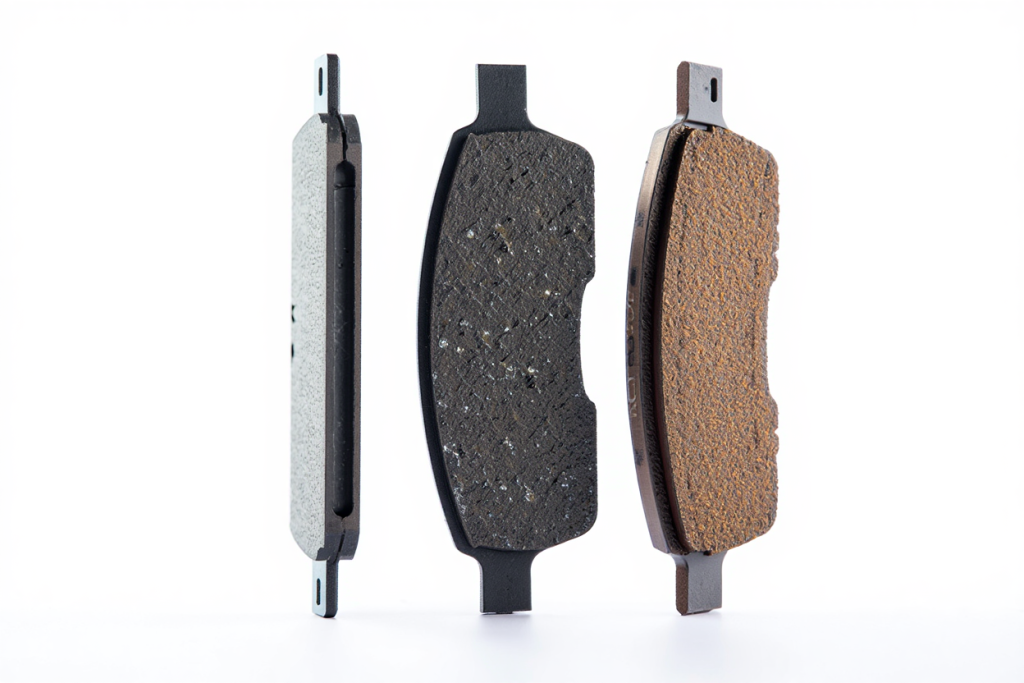
| Feature | Brake Pads | Brake Shoes |
| Brake Type | Disc | Drum |
| Typical Corolla Use | Front wheels (and rear on newer models) | Rear wheels (older/base models) |
| Response | Quick, responsive | Slower, less immediate |
| Lifespan | 25k–70k miles depending on type | 30k–60k miles |
| Maintenance | Easier, widely available | Labor-intensive if drums need resurfacing |
| Noise | Can squeal if worn | Usually quieter |
| Cost | $30–$120 per set | $25–$70 per set |
Key Takeaways for Corolla Owners
- Modern Corollas use disc brakes with pads for superior stopping power.
- Brake shoes remain reliable for older or budget rear brakes.
- Mixing components incorrectly can compromise braking performance.
Factors Affecting Brake Pad and Shoe Lifespan
Driving habits, terrain, climate, and material quality determine how long your Corolla’s pads or shoes last.
Driving Habits
Frequent hard braking shortens both pad and shoe life. Smooth, gradual braking extends lifespan.
Terrain and Load
Hilly terrain, towing, or heavy passenger loads increase friction and wear, reducing longevity.
Climate Conditions
Hot, dusty, or wet environments accelerate wear. Ceramic pads handle heat best, while shoes perform adequately under mild conditions.
Material Quality
Premium pads (ceramic or semi-metallic) last longer and generate less dust than low-quality organics. Brake shoes made with quality composites last longer and resist fade.
Cost of Brake Pads vs Brake Shoes for a Corolla
Brake pad replacement is slightly more expensive upfront but easier, while brake shoes are cheaper but labor-intensive.
Brake Pad Costs
- Organic: $30–$60 per set
- Semi-metallic: $40–$80 per set
- Ceramic: $70–$120 per set
- Labor: $100–$250 per axle
Brake Shoe Costs
- Standard organic shoes: $25–$50 per set
- Semi-metallic shoes: $35–$70 per set
- Labor: $120–$250 per axle, potentially higher if drums need resurfacing
OEM vs Aftermarket
OEM parts guarantee fit and performance, while aftermarket options may save money but vary in quality. Stick to trusted brands to avoid rotor or drum damage
Common Mistakes Corolla Owners Make
Summary: Incorrect replacement, ignoring wear signs, and using the wrong type reduces braking performance and increases costs.
- Using brake pads where shoes are required (or vice versa)
- Ignoring squealing, grinding, or vibrations
- Installing cheap, low-quality aftermarket parts
- Mixing materials on the same axle
- Skipping regular inspections
Practical Tips to Extend Brake Component Life
Summary: Proper maintenance, smooth driving, and timely inspections prolong the lifespan of pads and shoes.
- Brake smoothly to reduce friction and heat
- Inspect pads and shoes every 10,000 miles
- Replace brake fluid regularly to avoid corrosion and fade
- Pair quality pads or shoes with rotors/drums from trusted brands
- Maintain proper tire inflation for balanced braking
Conclusion
Brake pads and brake shoes serve different purposes in a Toyota Corolla. Pads offer quick, responsive braking for modern disc brake systems, while shoes provide durable, cost-effective braking in older or rear drum setups. Understanding the difference ensures you select the correct replacement, maintain safety, and avoid costly repairs.
Whether replacing pads or shoes, stick to quality OEM or trusted aftermarket parts, inspect your brakes regularly, and match the component type to your Corolla’s braking system for optimal performance.
Check our website for OEM and high-quality aftermarket brake pads and shoes for Toyota Corolla to maintain safe and reliable braking.
FAQs
- What’s the main difference between brake pads and shoes?
Brake pads are for disc brakes, providing quick, responsive stopping. Brake shoes are for drum brakes, offering slower but durable braking. - Which does a modern Toyota Corolla use?
Front wheels: brake pads (disc brakes). Rear wheels: pads on newer models, shoes on older/base trims. - Are brake shoes cheaper than pads?
Yes, shoes are usually less expensive upfront, but labor costs can make replacement similar to pads. - Can I replace brake pads with shoes?
No. Pads and shoes are designed for different braking systems. Replacing incorrectly can compromise safety. - How long do brake pads last in a Corolla?
25,000–70,000 miles, depending on type and driving conditions. - How long do brake shoes last?
30,000–60,000 miles under normal driving, though heavy use shortens lifespan. - Should I upgrade drum brakes to discs?
If your Corolla has rear drum brakes and you want improved performance, disc upgrades are possible but may require professional installation.

Benjamin Grey is an automotive engineer and writer at Car Parts Advisor. With years of experience in the automotive industry, he shares expert advice on car parts, maintenance, and repairs to help car owners keep their vehicles running smoothly.


