
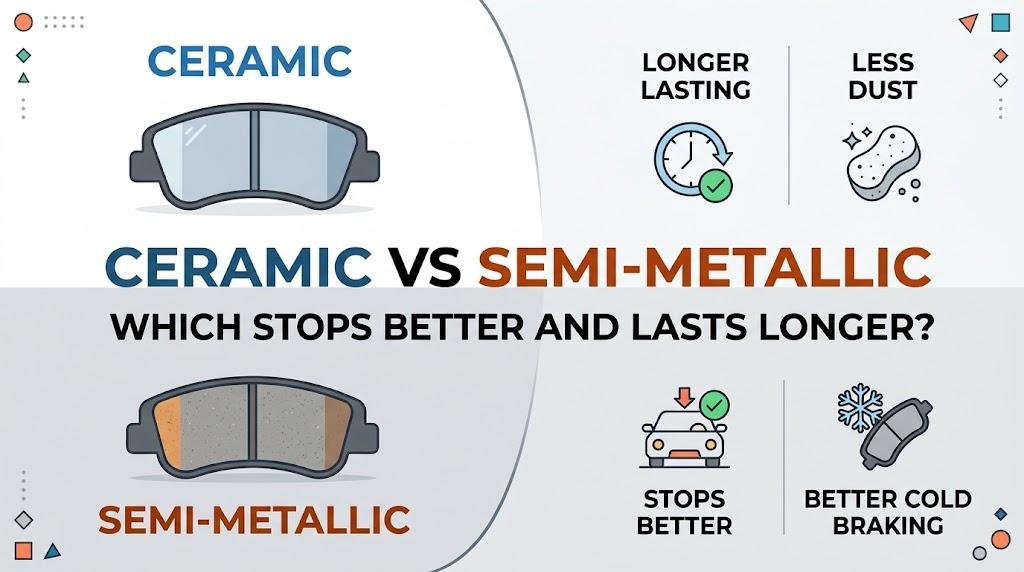
Few maintenance decisions affect your daily driving experience, safety, and wallet quite as much as choosing the right brake pads. When you press the brake pedal, you are trusting a complex friction system to bring thousands of pounds of moving steel to a controlled halt. Yet, when the time comes for a replacement, most drivers are met with a confusing fork in the road: Ceramic or Semi-Metallic?
Choosing between these two dominant friction materials is not just a matter of picking a brand off a shelf. It is a fundamental engineering compromise between initial bite, operating temperature, dust production, rotor wear, and longevity.
In this comprehensive guide, we will break down the chemistry, performance metrics, real-world applications, and hidden pitfalls of both ceramic and semi-metallic brake pads so you can make an informed decision for your vehicle.
1. Understanding the Basics: What Are Ceramic and Semi-Metallic Brake Pads?
Before evaluating performance metrics, it helps to understand what is actually happening inside your brake calipers. Brake pads consist of a steel backing plate bonded to a friction material. When hydraulic pressure forces the caliper piston outward, this friction material clamps onto the spinning brake rotor, converting kinetic energy into thermal energy.
What Are Ceramic Brake Pads?
Ceramic brake pads are crafted from dense ceramic materials—similar to the type used in pottery and plates—embedded with fine copper fibers or other metallic flakes to increase friction and thermal conductivity.
-
Key Characteristics: Extremely quiet operation, exceptionally low dust output, and stable performance across a wide temperature range.
-
Best Suited For: Daily commuters, luxury vehicles, urban drivers, and anyone who hates cleaning brake dust off their custom wheels.
Pro Tip: While ceramic pads are often marketed as “premium,” they are not automatically superior in every category. If you drive a heavy pickup truck towing a trailer through mountain passes, standard commuter ceramics might lack the aggressive initial bite you need.
What Are Semi-Metallic Brake Pads?
Semi-metallic brake pads contain anywhere from 30% to 65% metals by weight. The remaining composition includes graphite, fillers, lubricants, and modifiers bonded together under extreme heat and pressure. Common metals used include steel, iron, copper, and brass.
-
Key Characteristics: Aggressive initial bite, superior heat dissipation, exceptional heavy-duty performance, and higher durability under extreme loads.
-
Best Suited For: Track days, heavy towing, large SUVs, work trucks, and performance driving enthusiasts.
2. Stopping Power and Performance: Bite, Friction, and Braking Distance
When evaluating “which stops better,” the answer depends heavily on your driving environment and operating temperatures.
Cold Performance and Initial Bite
-
Semi-Metallic: These pads excel at providing an immediate, aggressive “bite” the moment your foot touches the pedal, even when the brakes are completely cold on a freezing winter morning.
-
Ceramic: Ceramic pads often require a brief warm-up period to reach their optimal coefficient of friction. While the difference in emergency stopping distance on modern high-end ceramics is negligible, older or budget ceramic formulations can feel slightly wooden until they catch some heat.
High-Temperature Performance and Brake Fade
Brake fade occurs when friction materials overheat, losing their ability to grip the rotor effectively.
-
Semi-Metallic: Metals are incredible conductors of heat. Semi-metallic pads can absorb and dissipate extreme thermal loads without fading. This makes them the undisputed king for track racing, steep downhill descents, and heavy towing.
-
Ceramic: Ceramic pads insulate heat rather than conducting it. While this protects your brake fluid and calipers from boiling, extreme repeated braking (like driving down a mountain pass with a heavy load) can push ceramic pads past their thermal limit, leading to sudden fade.
3. Durability, Lifespan, and Wear: Which Lasts Longer?
Longevity is a multi-layered equation involving pad life, rotor life, and driving conditions.
| Performance Metric | Ceramic Brake Pads | Semi-Metallic Brake Pads |
| Pad Lifespan | Long (Uniform, slow wear) | Moderate to Long (Depends heavily on metallic content) |
| Rotor Wear | Extremely low (Gentle on rotors) | Higher (More abrasive to cast iron rotors) |
| Brake Dust | Minimal (Light-colored, fine dust) | High (Dark, metallic, corrosive dust) |
| Noise Levels | Near silent | Can produce squeal/chatter |
Pad Lifespan
In typical daily driving conditions, ceramic pads generally last longer than lower-tier semi-metallic formulations. Their density and wear characteristics mean they shed material very slowly. However, high-end metallic racing pads can also endure punishing conditions that would destroy standard ceramic pads.
Rotor Wear
This is where ceramic pads hold a massive hidden advantage. Semi-metallic pads are abrasive by nature; they contain steel and iron chunks that scrub against the cast-iron rotor. Consequently, semi-metallic pads wear down rotors much faster. Ceramic pads are softer on rotors, often allowing you to get two full sets of pads out of a single set of rotors.
4. Comfort, Noise, and Aesthetics: The Daily Driving Experience
Performance metrics tell only half the story. The daily liveability of your brake pads dictates your comfort behind the wheel.
-
Noise: Ceramic pads use dense composition materials and embedded dampening shims that vibrate at frequencies inaudible to the human ear. Semi-metallic pads, due to their metallic content, are notoriously prone to brake squeal, especially in cold weather or during light stops.
-
Dust: If you have polished alloy or chrome wheels, semi-metallic pads are your worst enemy. They shed dark, sticky carbon and metal dust that cakes onto your wheel barrels within days of washing. Ceramic dust is sparse, white-gray, and easily rinses away.
Example: Imagine washing your car on a Sunday afternoon, only to find a thick layer of black soot coating your front rims by Wednesday morning. That is the classic semi-metallic experience. Switching to ceramic pads reduces visible wheel dust by up to 80–90%.
5. Common Pitfalls and Mistakes to Avoid
Choosing and installing brake pads can go wrong quickly if you fall into these common traps:
-
Ignoring Your Driving Profile: Putting aggressive track-spec semi-metallic pads on a commuter hatchback results in annoying noise, excessive rotor wear, and poor cold braking. Conversely, putting cheap ceramic pads on a heavy towing rig creates a severe safety hazard due to heat fade.
-
Skipping the Bedding-In Process: Regardless of which pad you choose, slapping new pads onto old or unresurfaced rotors without properly “bedding them in” (transferring an even layer of friction material to the rotor face) will cause vibrations, uneven wear, and reduced stopping power.
-
Overlooking Rotor Compatibility: If you switch from semi-metallic to ceramic (or vice versa), always inspect your rotors. Scoring, warping, or deep grooves will ruin your new pads prematurely. When in doubt, resurface or replace your rotors during a pad change.
-
Chasing the Lowest Price: Cheap brake pads utilize inferior bonding agents and uneven metal chunks. They are prone to cracking, crumbling, and premature failure. Always invest in reputable OE-equivalent or performance aftermarket brands.
Frequently Asked Questions (FAQs)
1. Do ceramic brake pads stop better than semi-metallic pads?
In normal daily driving conditions, high-quality ceramic pads offer stopping power equal to or better than semi-metallic pads, with the added benefit of being quieter and cleaner. However, for heavy-duty towing, track racing, or extreme cold-weather initial bite, semi-metallic pads generally outperform ceramics.
2. Why do my new semi-metallic brake pads squeal?
Semi-metallic pads contain high levels of metal fibers that naturally produce friction resonance against iron rotors. Squealing can be minimized by using proper anti-squeal paste on the backing plates, installing rubberized shims, and thoroughly cleaning the rotors before installation.
3. Which brake pads last longer?
Ceramic pads typically outlast semi-metallic pads in standard street driving because they wear down at a slower, more uniform rate. Furthermore, ceramic pads cause significantly less wear on your brake rotors, saving you money on rotor replacements down the line.
4. Are ceramic brake pads worth the extra upfront cost?
Yes, if you value clean wheels, silent operation, and extended rotor life. While ceramic pads often carry a higher initial price tag than basic semi-metallic options, the savings on reduced wheel cleaning and longer rotor life make them more cost-effective over their lifecycle for daily drivers.
Conclusion & Final Verdict
The battle between ceramic and semi-metallic brake pads ultimately comes down to matching your vehicle and driving habits to the right friction chemistry.
-
Choose Ceramic Brake Pads if your priority is a clean, quiet, low-maintenance daily commute with minimal wheel dust and long rotor life.
-
Choose Semi-Metallic Brake Pads if you need maximum stopping power, heavy towing capability, track-day endurance, and reliable cold-weather bite.

Benjamin Grey is an automotive engineer and writer at Car Parts Advisor. With years of experience in the automotive industry, he shares expert advice on car parts, maintenance, and repairs to help car owners keep their vehicles running smoothly.


