

Your car’s engine breathes through its air filter. Just like humans need clean air to function properly, your vehicle’s engine requires clean, uncontaminated air to burn fuel efficiently. The engine air filter prevents dust, dirt, pollen, leaves, and other debris from entering the engine. A dirty or clogged filter can drastically reduce performance, fuel efficiency, and even cause long-term damage to engine components like cylinders and pistons.
Many car owners ask: “How often should I change my engine air filter?” The answer isn’t one-size-fits-all. While most manufacturers recommend replacement every 12,000–15,000 miles, factors like driving conditions, air quality, and the type of filter used can shorten or extend this interval.
Why Does the Engine Air Filter Matters?
A clean air filter ensures optimal engine performance, fuel efficiency, and long-term protection.
The engine air filter is a small but critical part of your car’s intake system. Its primary role is to block contaminants while allowing a steady flow of air to the combustion chamber. Without it, dirt and debris could enter the engine, causing:
- Accelerated engine wear: Dirt particles act like sandpaper, wearing down cylinder walls, pistons, and valves.
- Reduced fuel efficiency: Restricted airflow affects the air-fuel mixture, forcing the engine to burn more fuel.
- Poor performance: Sluggish acceleration, rough idling, and stalling can occur with insufficient airflow.
- Higher emissions: A dirty filter leads to incomplete combustion, increasing pollutants released through the exhaust.
Recommended Replacement Intervals
Most engines require a new air filter every 12,000–15,000 miles, but driving conditions matter.
Standard Guidelines
Most vehicle manufacturers, including Toyota, recommend changing the engine air filter every 12,000–15,000 miles or once a year, whichever comes first. For newer models, your owner’s manual provides the exact specifications.
Severe Driving Conditions
Certain situations accelerate air filter contamination, requiring more frequent replacement:
- Dusty or sandy environments: Roads in deserts or unpaved areas can clog filters faster.
- Urban traffic with pollution: High smog areas contain more airborne particles.
- Short daily trips: Engines that don’t reach optimal temperature may not fully burn off contaminants.
- Frequent stop-and-go traffic: Creates more engine strain and air turbulence.
Signs Your Engine Air Filter Needs Replacement
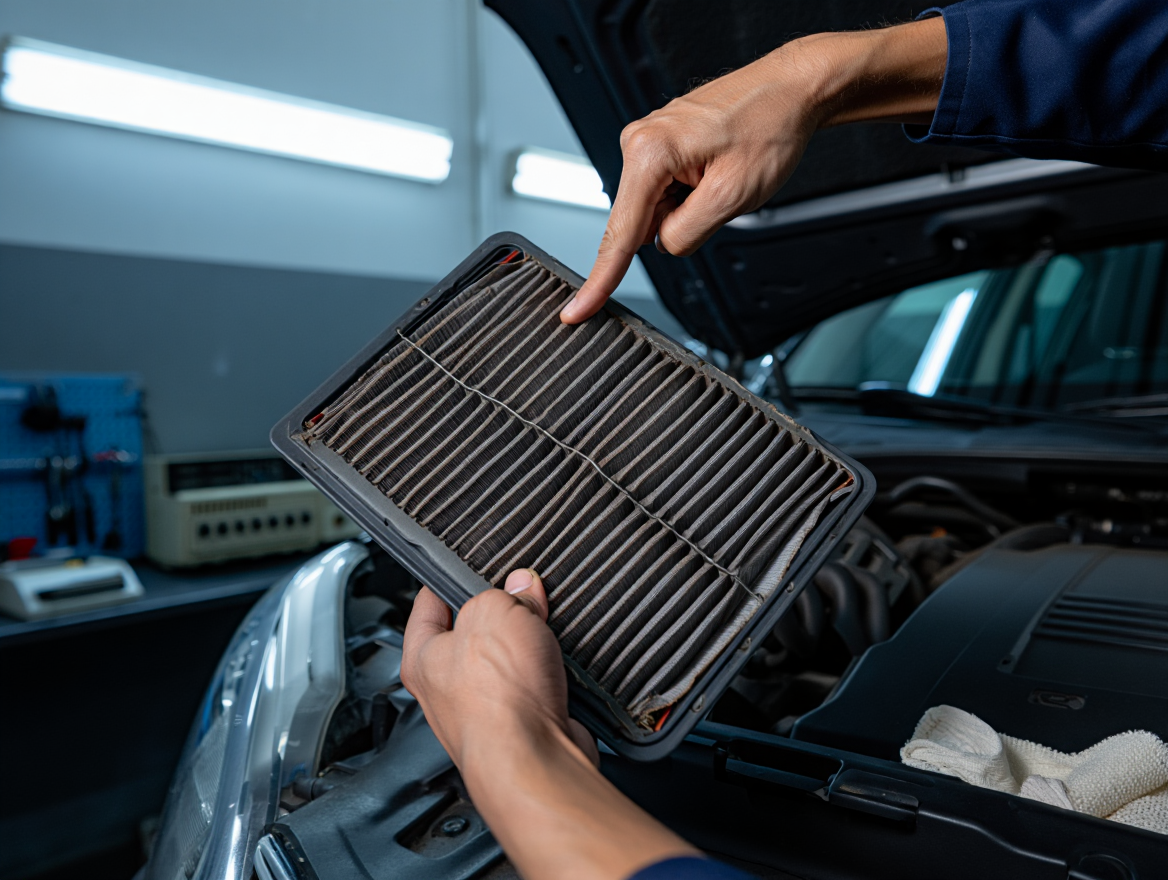
Watch for reduced performance, fuel economy, or visible dirt.
Even if you haven’t reached the recommended mileage, your air filter may need attention. Look for the following warning signs:
1. Reduced Fuel Economy
A clogged filter restricts airflow, leading the engine to use more fuel to maintain performance. You may notice you’re filling up the tank more often than usual.
2. Poor Acceleration
Your engine relies on a proper air-fuel mixture. A dirty air filter reduces airflow, causing sluggish acceleration, especially on inclines or during overtaking.
3. Engine Misfires or Rough Idling
Insufficient air can result in incomplete combustion, leading to misfires, rough idle, or even stalling.
4. Black Smoke from Exhaust
A clogged filter can lead to rich fuel combustion, producing black smoke from the tailpipe.
5. Check Engine Light
Modern vehicles monitor airflow through the Mass Air Flow (MAF) sensor. Restricted air can trigger the check engine light.
6. Visible Dirt or Debris
Remove the filter from its housing and inspect it. If it appears dark, clogged, or covered in dust, it’s time to replace it.
Types of Engine Air Filters
Paper, reusable, and performance filters each have unique benefits and costs.
1. Paper (OEM Standard) Filters
- Construction: Pleated paper media
- Pros: Affordable, easy to replace, effective in trapping debris
- Cons: Single-use, lifespan limited to 12,000–15,000 miles
- Best for: Daily commuters and standard driving conditions
2. Reusable (Cotton or Foam) Filters
- Construction: Oiled cotton or foam, washable
- Pros: Can last 50,000 miles with maintenance, environmentally friendly
- Cons: Requires cleaning and re-oiling, higher upfront cost
- Best for: Long-term owners or eco-conscious drivers
3. High-Performance Filters (Aftermarket)
- Construction: High-flow synthetic or cotton blends
- Pros: Improved airflow, slight performance boost
- Cons: Higher price, may let in more fine dust in harsh environments
- Best for: Performance enthusiasts or modified engines
OEM vs Aftermarket Air Filters
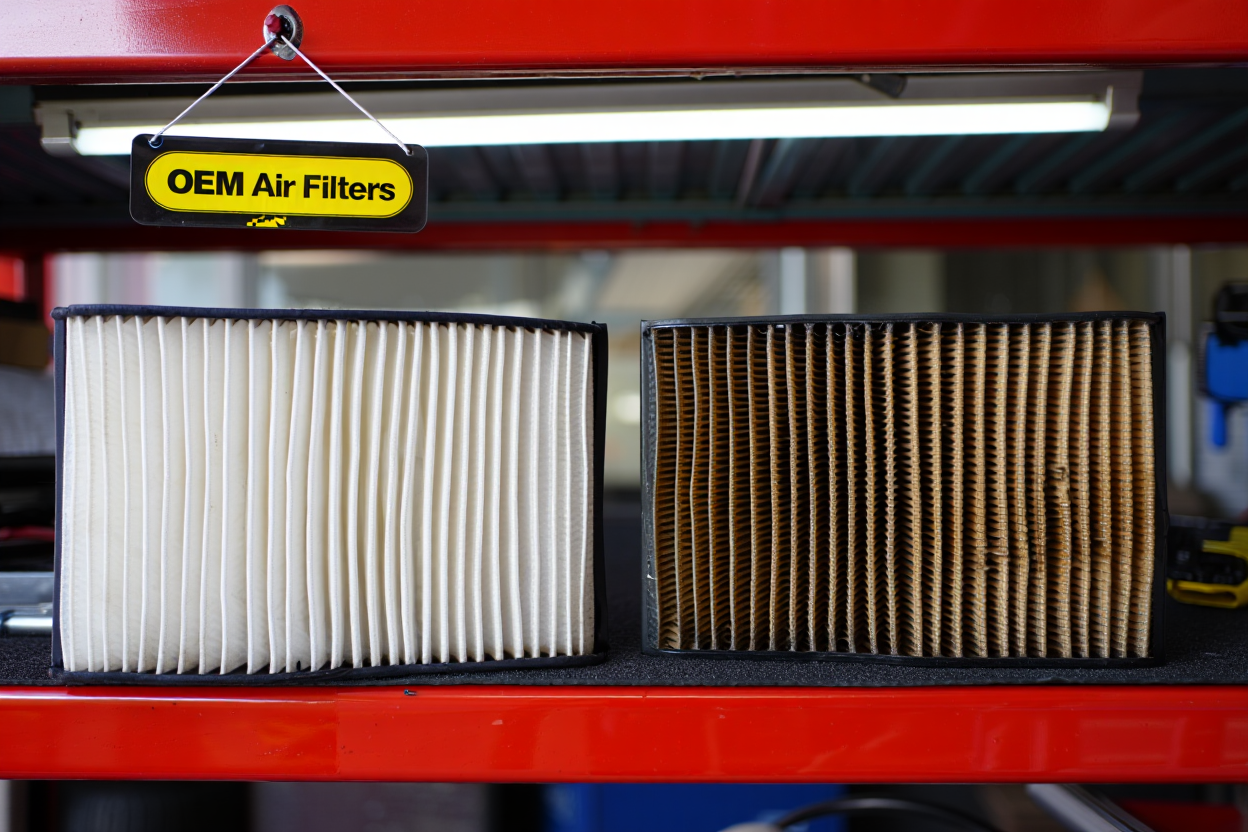
OEM filters ensure perfect fit and warranty coverage, aftermarket offers variety and potential upgrades.
OEM Filters
- Perfectly engineered for your vehicle model
- Ensures manufacturer-specified filtration and airflow
- Usually priced $20–$40
Aftermarket Filters
- Range from budget-friendly to high-performance
- Performance filters may increase airflow, potentially boosting horsepower slightly
- Price range: $15–$80, depending on quality
- Choose reputable brands to avoid poor filtration that can damage your engine
Cost of Engine Air Filter Replacement
Low-cost maintenance prevents expensive engine repairs.
- Filter Price:
- Standard OEM paper: $15–$40
- Reusable cotton/foam: $50–$80
- High-performance: $60–$80
- Standard OEM paper: $15–$40
- Labor Costs:
- DIY: Free, under 10 minutes
- Professional service: $25–$60
- DIY: Free, under 10 minutes
DIY vs Professional Replacement
DIY is quick and affordable, professional service ensures thorough inspection.
DIY Replacement
- Most modern cars provide easy access
- Requires no special tools
- Take 5–10 minutes to remove the housing and insert a new filter
Professional Replacement
- Ensures proper installation
- Mechanic can inspect other components like hoses and MAF sensors
- Convenient if combined with routine maintenance like oil changes
Common Mistakes to Avoid
Mistakes like ignoring conditions or using low-quality filters shorten engine life.
- Ignoring replacement intervals and symptoms
- Using substandard filters that allow fine dust in
- Installing incorrectly, leaving gaps for unfiltered air
- Forgetting to check after driving in dusty or urban environments
- Using high-performance filters in harsh conditions without proper maintenance
Practical Tips to Extend Air Filter Life
Simple habits delay replacement and protect your engine.
- Park in garages or shaded areas to reduce dust intake
- Avoid tailgating dusty trucks
- Inspect the filter monthly and tap out loose debris
- Stick to high-quality OEM or trusted aftermarket filters
- Replace sooner if driving in extreme conditions like desert roads or heavy traffic
Conclusion
The engine air filter is a small, inexpensive component with a big impact on your car’s health, performance, and fuel efficiency. For most cars, replacing it every 12,000–15,000 miles is ideal, but harsh environments may require earlier changes.
By monitoring symptoms like sluggish acceleration, poor fuel economy, and visible dirt, you can proactively replace the filter. Whether you choose OEM, aftermarket, or reusable high-performance filters, timely maintenance ensures your engine stays healthy and efficient for years to come.
FAQs
- How often should I change my engine air filter?
Every 12,000–15,000 miles, or sooner if driving in dusty, urban, or extreme conditions. - Can I clean a paper air filter?
No. Paper filters are single-use. Only washable cotton or foam filters can be cleaned and reused. - Will a dirty air filter affect fuel economy?
Yes. Restricted airflow reduces combustion efficiency, increasing fuel consumption. - Are reusable filters worth it?
If properly maintained, they can last longer and reduce waste, but require cleaning and re-oiling. - Can I replace the air filter myself?
Yes. Most cars allow quick DIY replacement with minimal tools. - Do air filters differ by car model?
Yes. Always check your vehicle’s manual or parts catalog for correct size and specifications. - What happens if I wait too long to replace it?
Clogged filters reduce performance, fuel efficiency, and can allow contaminants to enter the engine, causing damage.

Benjamin Grey is an automotive engineer and writer at Car Parts Advisor. With years of experience in the automotive industry, he shares expert advice on car parts, maintenance, and repairs to help car owners keep their vehicles running smoothly.


