
Taking your car to a mechanic can be stressful, especially when it comes to bills. Many car owners worry about being overcharged or paying for unnecessary repairs. With complex systems, technical jargon, and varying labor rates, it’s easy to feel unsure about whether the price is fair.
This guide will help you identify overcharging, understand repair costs, and make informed decisions. By learning how shops calculate labor, parts, and fees, you can protect your wallet and avoid paying more than necessary.
Understanding Auto Repair Costs
To spot overcharging, you first need to understand how auto repair costs are calculated.
Labor Rates
Labor often makes up the largest portion of your repair bill. Mechanics typically charge hourly rates that vary by location, shop reputation, and vehicle type. Luxury or hybrid vehicles often have higher labor costs due to specialized knowledge and longer repair times.
- Estimate Verification: Labor hours are usually calculated using service manuals like Chilton, Haynes, or ALLDATA, which provide standard time estimates for each repair. If a shop quotes more hours than these standards, it could be a warning sign.
- OEM vs. Aftermarket Complexity: Using OEM parts may require extra labor due to specific installation procedures. Conversely, aftermarket parts may install faster, but sometimes require adjustments.
Example: A Toyota Camry brake job may take 1.5 hours according to manuals, but some shops quote 3 hours. Asking for a breakdown prevents overcharging.
Parts Pricing
Parts markups can be a major source of overcharging. Mechanics often source parts from distributors and apply a markup to cover shop overhead and profit.
- OEM vs. Aftermarket: OEM (Original Equipment Manufacturer) parts are exact replacements but usually more expensive. Aftermarket parts are often cheaper but can vary in quality. Knowing the difference helps you evaluate whether the price is fair.
- Refurbished Parts: Some shops may offer refurbished parts at a lower cost. Ensure they meet safety and performance standards.
- Red Flags: A simple filter replacement quoted at three times online retail cost may indicate overcharging.
Pro Tip: Always check online prices for parts before authorizing repair. Trusted websites, auto forums, or manufacturer dealers provide a baseline for comparison.
Additional Fees
Beyond labor and parts, shops may charge additional fees that sometimes surprise customers.
- Common Legitimate Fees: Shop supplies, environmental disposal, and hazardous waste fees.
- Excessive or Unexplained Fees: If a fee appears vague, ask the mechanic to clarify. For example, a “shop supply fee” should correspond to gloves, rags, or lubricants used.
- Transparency: Shops that clearly itemize fees are usually more trustworthy. Lack of transparency may indicate an attempt to inflate the total bill.
Example: One driver was charged $40 for “shop supplies” on a minor oil change. Upon inquiry, the shop detailed that it included new drain plugs, rags, and disposal of old oil, which justified the fee.
How to Avoid Mechanic Overcharging

Signs a Mechanic May Be Overcharging
Recognizing red flags helps you avoid overpaying or falling victim to unnecessary services.
Inflated Labor Hours
- Compare Estimates: Use repair manuals or online resources to check standard labor times.
- Watch for Unnecessary Diagnostics: Some shops may add hours for “diagnostic time” that could have been completed faster.
Example: A Corolla owner was quoted 2 hours for replacing a cabin air filter—a task that typically takes 15–20 minutes. Questioning the labor time led to a corrected, fair price.
Unneeded Repairs or Parts
- Upselling Common Extras: Mechanics may suggest services like engine flush, fuel injector cleaning, or unnecessary fluid replacements.
- Ask Why: Request a clear explanation of how a repair benefits your car. If vague, get a second opinion.
Pro Tip: If a shop insists on multiple replacements, ask for evidence, such as showing worn parts or diagnostic test results.
Lack of Transparency
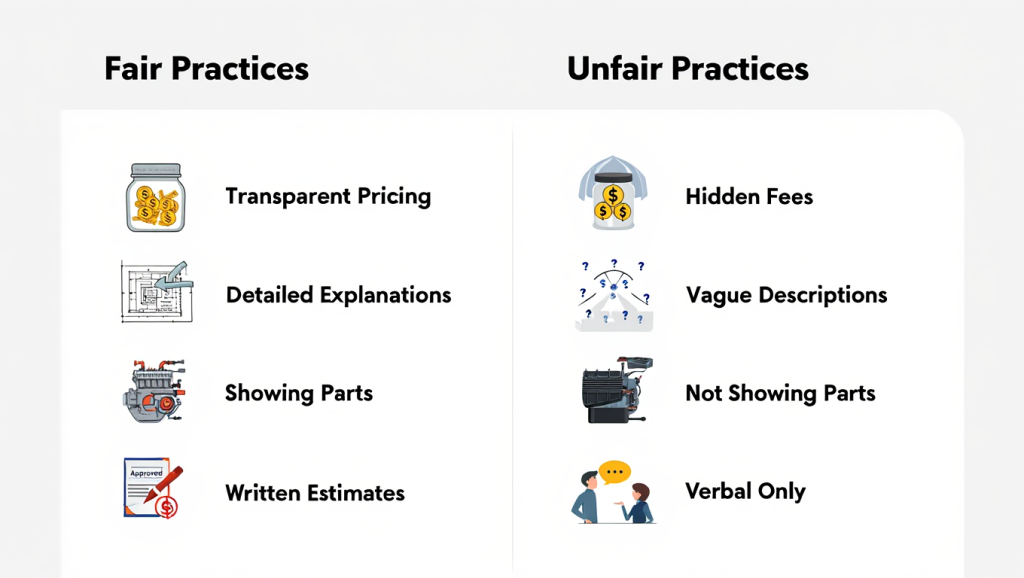
- No Written Estimate: Always request a detailed, itemized estimate before work begins.
- Refusal to Show Parts: If a shop replaces parts without allowing inspection, it may indicate unnecessary replacements.
Example: A RAV4 owner was told “the alternator is bad” without being shown the damaged part. Requesting a visual confirmation and a second opinion prevented a $450 overcharge.
How to Protect Yourself?
Preventive steps and proactive questions ensure you only pay what’s fair.
Get Multiple Quotes
- Comparing 2–3 shops helps identify outliers.
- Understanding why estimates differ gives insight into labor or parts variations.
Know the Market Rate
- Use online pricing guides, forums, or manufacturer websites.
- Apps and websites like RepairPal provide national average repair costs.
Ask Questions
- Request itemized invoices and explanations for each service.
- Ask about OEM vs. aftermarket options, warranty, and alternatives.
Inspect Parts Yourself
- Verify replaced parts match your invoice.
- Take photos before and after repairs if possible.
Example: One driver took photos of old brake pads before replacement. The shop confirmed they matched the worn pads, ensuring only necessary parts were replaced.
Common Mistakes Car Owners Make
Many car owners unknowingly pay more than necessary because of simple mistakes. Avoiding these errors can save hundreds of dollars and prevent unnecessary repairs.
Not Asking for Written Estimates
- Verbal Quotes Can Be Misleading: Without an itemized written estimate, it’s easy for labor or parts costs to increase unexpectedly.
- Solution: Always request a detailed estimate before authorizing work. Include labor hours, parts, and additional fees.
Example: A Toyota Camry owner was told “it’ll be around $500” for brake work. Without a written estimate, the bill came to $720. Insisting on a written estimate would have revealed unnecessary add-ons.
Assuming the First Recommendation Is Mandatory
- Mechanics May Suggest Extra Services: Some recommendations, like engine flush or fuel injector cleaning, are often optional or based on upselling practices.
- Solution: Ask if the service is urgent, and get a second opinion if unsure.
Example: A Corolla owner was advised to replace the transmission fluid immediately. Research revealed it was only due at 60,000 miles, not 35,000. Declining the unnecessary service saved money.
Ignoring Shop Reviews or Recommendations
- Why It Matters: Reputation matters. Shops with poor customer reviews often have a history of overcharging.
- Solution: Check online reviews, forums, and ask friends or family for trusted mechanics.
Failing to Research Part Costs
- Red Flag: If a replacement part costs significantly more than online prices, it could indicate overcharging.
- Solution: Know average costs for your car’s parts. Use manufacturer, dealer, or reputable online retailers as a benchmark.
Additional Tips to Avoid Overcharging
Beyond recognizing signs, there are proactive steps to protect yourself and ensure fair pricing.
Keep a Maintenance Log
- Record service dates, repairs, parts used, and costs.
- A detailed log helps mechanics avoid unnecessary recommendations and provides a reference for future repairs.
Ask for Old Parts Back
- Requesting replaced parts helps verify whether the replacement was necessary.
- Inspect parts yourself or compare them with online images to ensure authenticity.
Use Trusted Mechanics
- Build a relationship with a reputable shop. Repeat business encourages honesty and fair pricing.
Learn Basic Car Knowledge
- Understanding your vehicle’s systems makes it easier to question recommendations. Even basic knowledge about brakes, fluids, or filters improves your confidence during service.
Example: A RAV4 owner noticed a mechanic recommending a spark plug replacement. Knowing that spark plugs last 60,000 miles helped the owner question the service, ultimately avoiding a $200 unnecessary replacement.
Compare Labor and Part Costs
- Use multiple quotes for major repairs.
- Compare labor hours and parts to standard manuals or online pricing.
Conclusion
Being overcharged at a mechanic is frustrating but avoidable with awareness and preparation. Understand labor, parts, and additional fees, recognize red flags like inflated labor or unnecessary repairs, and always request itemized estimates. Ask questions, compare quotes, and maintain records of past services. Building knowledge about your car and working with trusted mechanics ensures fair pricing. By taking these proactive steps, you protect your wallet, avoid unnecessary repairs, and gain confidence in your vehicle’s maintenance. Before your next service, use this guide to ensure you pay what’s fair, not more.
FAQs
- How can I tell if labor hours are inflated?
Compare quoted hours to standard service manuals like ALLDATA or Chilton. If the estimate is significantly higher, ask for a breakdown. A reputable shop will justify the time. - Are OEM parts always more expensive than aftermarket?
Yes, OEM parts are typically costlier but guarantee compatibility and warranty coverage. Aftermarket parts may be cheaper but vary in quality, so research before choosing. - Is it safe to challenge a mechanic about unnecessary repairs?
Absolutely. Asking questions or requesting proof of worn parts is reasonable. Reputable mechanics should explain and demonstrate why repairs are necessary. - Should I pay for “shop supplies” on every invoice?
Some fee is standard to cover gloves, rags, and disposal. However, excessive or unexplained charges warrant clarification. Always request a breakdown. - Can I get my car fixed elsewhere if I suspect overcharging?
Yes. You have the right to seek a second opinion or transfer your car. Comparing estimates helps ensure fair pricing. - How often should I research part and labor costs?
Before every major repair or unusual service. Regularly checking prevents overpayment and gives bargaining power. - Are online quotes reliable?
Online quotes provide a baseline. Real-world costs may vary slightly, but large discrepancies should raise questions.

Benjamin Grey is an automotive engineer and writer at Car Parts Advisor. With years of experience in the automotive industry, he shares expert advice on car parts, maintenance, and repairs to help car owners keep their vehicles running smoothly.


