
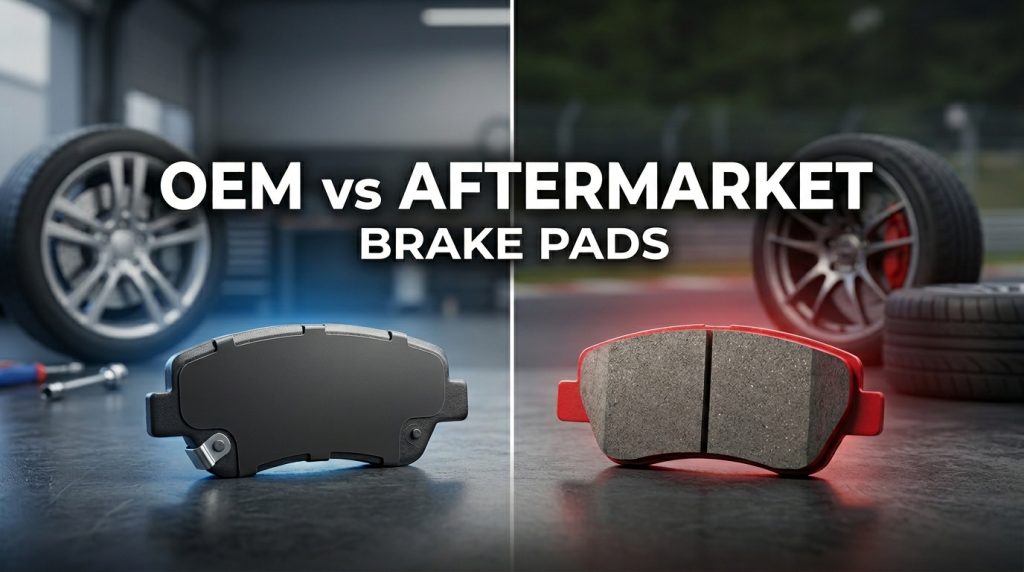
When it’s time to replace your brake pads, you’re faced with a crucial decision: should you stick with OEM (Original Equipment Manufacturer) parts or opt for aftermarket alternatives? This choice affects not only your wallet but also your vehicle’s safety, performance, and long-term maintenance costs. Let’s dive deep into the differences, advantages, and drawbacks of both options to help you make an informed decision.
Understanding the Basics
What Are OEM Brake Pads?
OEM brake pads are manufactured by or for the same company that built your vehicle. When you buy OEM pads from a dealer, you’re getting parts that are identical (or nearly identical) to what came installed on your car from the factory. These pads are designed specifically for your vehicle’s make and model, meeting the original manufacturer’s specifications.
What Are Aftermarket Brake Pads?
Aftermarket brake pads are produced by third-party manufacturers independent of your vehicle’s original maker. Companies like Bosch, Wagner, Akebono, and Brembo create brake pads designed to fit multiple vehicle applications. Quality aftermarket options like these often meet or exceed OEM specifications while offering additional choices in materials and performance characteristics.
The Case for OEM Brake Pads
Guaranteed Compatibility
The strongest argument for OEM brake pads is perfect fitment. Since they’re designed specifically for your vehicle, there’s zero guesswork involved. You know with absolute certainty that these pads will fit your calipers, work with your rotors, and function exactly as your vehicle’s engineers intended.
Consistent Quality Standards
OEM parts undergo rigorous testing to meet the manufacturer’s specifications. The quality control is typically stringent, ensuring consistent performance across all units. This consistency means you can expect the same braking feel and performance you experienced when your vehicle was new.
Warranty Protection
If your vehicle is still under the manufacturer’s warranty, using OEM parts ensures you won’t risk voiding coverage. Dealers may refuse warranty claims if they determine that aftermarket parts contributed to a failure, making OEM parts the safer choice for newer vehicles.
Simplified Selection Process
Shopping for OEM pads is straightforward—you simply tell the dealer your VIN or vehicle information, and they provide the correct parts. There’s no need to research different brands, materials, or performance characteristics.
Drawbacks of OEM Brake Pads
Higher Cost: OEM brake pads typically cost 50-100% more than comparable aftermarket options. You’re paying for the brand name and dealer markup.
Limited Options: OEM offers one specification. If you want enhanced performance, less dust, or quieter operation, you’re out of luck.
Availability Issues: Dealer parts departments may not stock every part, requiring you to wait for orders, especially for older or less common vehicles.
The Case for Aftermarket Brake Pads
Cost Savings
The most obvious advantage of aftermarket brake pads is price. Quality aftermarket pads can cost 30-60% less than OEM equivalents while delivering comparable or superior performance. For DIY installers, premium aftermarket brake pads offer exceptional value without compromising safety.
Performance Variety
Aftermarket manufacturers offer multiple brake pad compounds tailored to different driving styles and needs:
Ceramic Pads: Produce less dust, run quieter, and generate less rotor wear. Ideal for daily drivers and luxury vehicles.
Semi-Metallic Pads: Offer excellent heat dissipation and strong stopping power. Great for trucks, SUVs, and performance applications.
Organic Pads: Softer, quieter operation with minimal rotor wear. Best for light-duty applications and older vehicles.
Performance Pads: Enhanced materials for aggressive driving, track use, or towing. Higher friction coefficients and improved fade resistance.
Innovation and Improvement
Third-party manufacturers aren’t bound by original specifications. Many aftermarket companies invest heavily in research and development, creating formulations that address common OEM shortcomings. For example, if your vehicle’s OEM pads produce excessive dust, aftermarket ceramic alternatives can virtually eliminate this issue.
Quality Competition
The aftermarket industry is highly competitive, pushing manufacturers to deliver superior value. Reputable brands like Bosch, Wagner, and Akebono have earned their reputations by consistently meeting or exceeding OEM quality standards while innovating beyond original specifications.
Wide Availability
Aftermarket brake pads are available at countless retailers—auto parts stores, online marketplaces, and specialty shops. This accessibility means you can often get parts the same day rather than waiting for dealer orders.
Drawbacks of Aftermarket Brake Pads
Variable Quality: Not all aftermarket brands are created equal. Low-quality pads from unknown manufacturers may use inferior materials, leading to premature wear, poor performance, or excessive noise.
Research Required: With hundreds of options available, choosing the right aftermarket pads requires research and understanding of different materials and brands.
Fitment Variations: While most quality aftermarket pads fit properly, occasional fitment issues can occur, requiring modifications or returns.
Warranty Considerations: Using aftermarket parts on newer vehicles may complicate warranty claims, though the Magnuson-Moss Warranty Act protects consumers in most situations.
Performance Comparison: Head-to-Head
Stopping Power
Winner: Tie
Quality aftermarket pads match or exceed OEM stopping power. In fact, many performance-oriented aftermarket pads outperform OEM specifications. However, budget aftermarket options may underperform compared to OEM.
Durability and Longevity
Winner: Aftermarket (Premium Options)
While OEM pads offer predictable lifespan, premium aftermarket pads often last longer due to advanced formulations. High-quality aftermarket brake pads frequently outlast OEM equivalents by 10-30%, especially ceramic formulations.
Noise and Vibration
Winner: OEM (Slight Edge)
OEM pads are specifically tuned to your vehicle’s braking system, minimizing noise and vibration. However, premium ceramic aftermarket pads often match or surpass OEM quietness while reducing brake dust.
Brake Dust Production
Winner: Aftermarket (Ceramic Options)
Many OEM pads produce significant brake dust, especially on performance and luxury vehicles. Aftermarket ceramic pads drastically reduce dust accumulation on wheels, making maintenance easier.
Cold and Hot Performance
Winner: Depends on Application
OEM pads provide balanced performance across temperature ranges for typical driving. Aftermarket options allow you to optimize for specific conditions—enhanced cold bite for winter driving or superior fade resistance for towing or mountainous terrain.
Cost Analysis: The Real Numbers
Initial Purchase Price
OEM Example: Front brake pad set for a popular midsize sedan: $120-$180 (dealer pricing)
Aftermarket Premium: Equivalent ceramic pad set: $50-$100
Aftermarket Budget: Basic semi-metallic pads: $30-$50
Savings: $30-$130 per axle with aftermarket
Long-Term Value Calculation
Consider a vehicle driven 15,000 miles annually requiring brake service every 40,000 miles:
OEM Path (over 120,000 miles):
- Three brake services at $160 average = $480
- Labor (if professionally installed) = $360
- Total: $840
Premium Aftermarket Path:
- Three brake services at $75 average = $225
- Labor (if professionally installed) = $360
- Total: $585
DIY Aftermarket Path:
- Three brake services at $75 average = $225
- Total: $225
Over the vehicle’s lifetime, choosing quality aftermarket pads can save $250-$600 or more, while premium aftermarket options may also last longer, reducing service frequency.
Making Your Decision: Key Considerations
Choose OEM Brake Pads If:
- Your vehicle is under warranty: Protect your coverage by using manufacturer-specified parts
- You prioritize simplicity: You want zero guesswork and guaranteed compatibility
- Your vehicle is rare or exotic: Limited aftermarket options may not match OEM quality
- Budget isn’t a primary concern: You value peace of mind over cost savings
- You’re satisfied with original performance: No need to improve on what already works well
Choose Aftermarket Brake Pads If:
- You want to save money: Quality aftermarket offers 30-60% savings
- You’re seeking improved performance: Specialized formulations address specific needs
- Brake dust is a concern: Ceramic aftermarket pads dramatically reduce wheel grime
- You value selection: Multiple options let you optimize for your driving style
- Your vehicle is out of warranty: No coverage concerns about using third-party parts
- You’re upgrading for towing or performance: Enhanced friction materials exceed OEM capabilities
The Hybrid Approach: Best of Both Worlds
Many experienced car owners adopt a hybrid strategy:
Front Brakes: Install premium aftermarket pads like ceramic formulations for reduced dust and excellent stopping power. The front brakes handle 60-70% of braking force, making quality crucial.
Rear Brakes: Use quality aftermarket or even OEM, depending on vehicle requirements and budget. Rear brakes wear more slowly, making longevity less critical.
This approach balances cost savings with performance optimization while maintaining safety margins.
Brand Recommendations
Premium Aftermarket Brands (OEM-Quality or Better)
- Akebono: Ceramic specialists, often OEM suppliers
- Bosch: European engineering, excellent all-around performance
- Wagner: OE supplier with comprehensive coverage
- Brembo: Performance-oriented, premium pricing
- Raybestos: Professional-grade, wide application range
Mid-Range Reliable Brands
- Centric: Good value with solid performance
- ACDelco: GM’s aftermarket arm, quality across brands
- Motorcraft: Ford’s aftermarket offering
- Power Stop: Performance-focused with value pricing
Brands to Approach Cautiously
Avoid unknown brands with extremely low prices, no reviews, or vague country-of-origin information. Rock-bottom pricing often indicates inferior materials that compromise safety.
Installation Considerations
Whether you choose OEM or aftermarket, proper installation is crucial:
- Professional Installation: If you lack experience, pay for professional service. Improperly installed pads compromise safety regardless of quality.
- DIY Installation: With basic tools and mechanical aptitude, brake pad replacement is manageable for many home mechanics. Quality aftermarket pads typically include installation hardware and clear instructions.
- Complete the Job Right: Always replace pads in axle sets (both front or both rear), inspect rotors for wear, and properly bed-in new pads according to manufacturer instructions.
- Don’t Mix and Match: Use the same brand and type on both sides of an axle to ensure balanced braking performance.
The Verdict: Which Is Worth It?
The answer depends on your specific situation, but for most drivers, premium aftermarket brake pads offer the best value. Here’s the breakdown:
For Daily Drivers (Majority of Vehicles): Premium aftermarket ceramic pads provide OEM-equivalent or superior performance at significantly lower cost. The reduced brake dust alone makes them worthwhile, and you’ll save hundreds over the vehicle’s lifetime.
For Vehicles Under Warranty: OEM pads eliminate any warranty concerns, though remember that the Magnuson-Moss Warranty Act protects your right to use aftermarket parts in most cases.
For Performance Applications: Specialized aftermarket pads designed for high-performance driving, towing, or track use far exceed OEM capabilities in their intended applications.
For Budget-Conscious Owners: Even mid-range aftermarket pads from reputable brands deliver safe, reliable performance at fraction of OEM cost.
For Enthusiasts: Aftermarket options let you fine-tune your braking system to match your driving style and performance needs.
Final Recommendations
The OEM vs. aftermarket debate doesn’t have a universal answer, but these guidelines will serve most drivers well:
- Research thoroughly: Read reviews, check specifications, and understand what you’re buying
- Prioritize quality over price: Don’t buy the cheapest option; invest in reputable brands
- Match pads to usage: Daily commuters have different needs than weekend canyon carvers
- Consider total value: Factor in longevity, dust production, and noise alongside initial cost
- Don’t compromise safety: Whether OEM or aftermarket, ensure parts meet safety standards
Premium aftermarket brake pads represent an excellent middle ground—delivering OEM-quality performance with enhanced features at lower cost. For the vast majority of applications, they’re worth it.
Your brakes are your vehicle’s most critical safety system. Whether you choose OEM or aftermarket, invest in quality parts from reputable sources, ensure proper installation, and maintain them according to manufacturer recommendations. The few dollars saved on inferior pads simply isn’t worth the risk to your safety and that of others on the road.

Benjamin Grey is an automotive engineer and writer at Car Parts Advisor. With years of experience in the automotive industry, he shares expert advice on car parts, maintenance, and repairs to help car owners keep their vehicles running smoothly.