
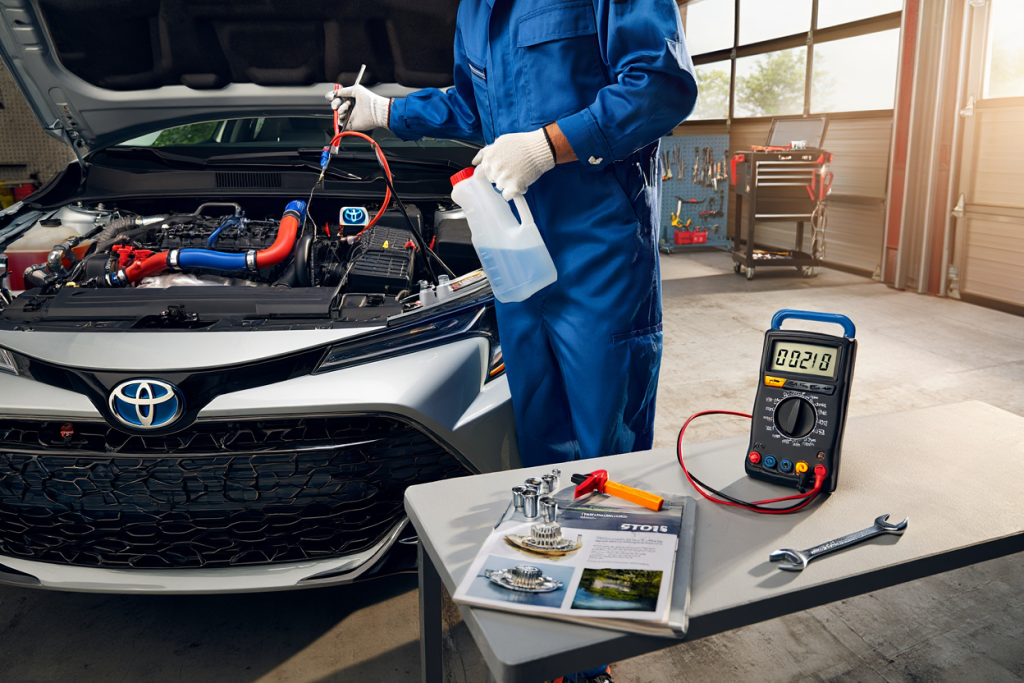
Summer driving can be harsh on your vehicle. High temperatures increase the risk of engine overheating, tire blowouts, battery failure, and AC strain. For Toyota owners, proper summer maintenance is essential to ensure safety, reliability, and comfort on long drives or daily commutes.
This guide highlights practical tips for summer car care, focusing on the cooling system, tires, and battery. By following these steps, you can prevent breakdowns, avoid costly repairs, and enjoy a smooth, stress-free driving experience.
Check Your Cooling System
Your Toyota’s engine generates significant heat, and summer temperatures amplify that stress. A well-maintained cooling system prevents overheating, engine damage, and costly repairs.
Inspect Coolant Levels and Condition
Coolant (antifreeze) regulates engine temperature. Low or contaminated coolant can lead to overheating, head gasket failure, or warped engine components.
- Toyota Recommended Coolant: Always use Toyota-approved coolant for your specific model. Most newer models require Toyota Super Long Life Coolant (SLLC).
- Check Levels: Open the hood and check the coolant reservoir. Ensure the level is between the “MIN” and “MAX” marks.
- Signs of Trouble: Discolored or rusty coolant, foul smell, or low levels are red flags.
Example: A Camry owner noticed the temperature gauge rising during summer traffic. Checking revealed low coolant caused by a minor radiator leak. After topping up with Toyota SLLC and fixing the leak, the engine ran safely without overheating.
Radiator and Hose Maintenance
The radiator and hoses circulate coolant efficiently. Heat can cause hoses to crack or the radiator to clog.
- Inspect Hoses: Check for cracks, bulges, or soft spots. Replace hoses showing any wear.
- Flush the Radiator: Toyota recommends flushing and replacing coolant every 50,000–100,000 miles depending on model and conditions.
- Radiator Cap Check: A faulty cap can reduce system pressure, leading to overheating. Ensure the cap seals properly and replace if needed.

Maintain Tires for Hot Weather
Tires are critical for safety, fuel efficiency, and performance. Heat causes air to expand, increasing tire pressure, which can lead to blowouts or uneven wear.
Check Tire Pressure Regularly
- Recommended PSI: Check the sticker inside the driver’s door for your Toyota’s recommended tire pressure.
- Hot Weather Adjustment: Tire pressure can rise 2–4 PSI in hot weather. Check pressure weekly to maintain optimal levels.
- Tools: Use a reliable tire pressure gauge; digital models provide precise readings.
Example: A RAV4 owner noticed uneven tread wear in summer. After checking tire pressure, they found it was 8 PSI over the recommended level. Adjusting it prevented further wear and improved handling.
Inspect Tread and Alignment
- Tread Depth: Check tread using a penny or tread depth gauge; minimum safe depth is 2/32 inches.
- Alignment and Rotation: Uneven wear may indicate misalignment or the need for rotation. Toyota recommends tire rotation every 5,000–7,500 miles.
- Signs of Damage: Look for cuts, bulges, or foreign objects in the tread.
Pro Tip: Overloading your Toyota in summer increases tire stress and can cause blowouts. Stick to the manufacturer’s weight limits, especially during trips with luggage or cargo.
Protect Your Battery
Intro: Hot summer weather accelerates battery fluid evaporation and can reduce lifespan. A healthy battery is essential for starting your Toyota reliably in high temperatures.
Signs of Battery Stress
- Slow cranking when turning the key
- Dashboard lights dimming or flickering
- Corrosion on battery terminals
Maintenance Tips
- Clean Terminals: Remove corrosion with a battery cleaning brush or mixture of baking soda and water. Ensure tight, secure connections.
- Check Voltage: A healthy battery should read 12.6 volts when the engine is off and around 13.7–14.7 volts when running.
- Test Load: During hot months, testing the battery’s ability to hold a charge under load helps prevent unexpected failures.
- Replacement: Most car batteries last 3–5 years. If your Toyota’s battery is approaching this age or shows weakness, replace it proactively.
Example: A Highlander owner had trouble starting the car after parking in direct sun. Testing revealed the battery was weak. Replacing it with a Toyota OEM battery restored reliable starts even on scorching days.
Pro Tip: Keep jumper cables or a portable jump starter in your car during summer. High temperatures combined with older batteries increase the risk of sudden failure.
Air Conditioning and Cabin Comfort
Summer heat not only makes driving uncomfortable but also places extra strain on your Toyota’s engine. A well-maintained air conditioning (AC) system keeps your cabin cool, improves fuel efficiency, and reduces engine load. Neglecting AC maintenance can lead to poor performance and costly repairs.
Check AC Performance
The AC system relies on refrigerant and proper component function to cool the cabin effectively.
- Refrigerant Levels: Low refrigerant reduces cooling efficiency. Toyota recommends checking AC refrigerant annually or whenever cooling seems weak.
- Inspect Components: Check hoses, compressor, and condenser for leaks, damage, or unusual noises. Any visible issues should be addressed promptly.
- Performance Test: Turn the AC to the highest setting and ensure cold air flows consistently from all vents. Uneven airflow may indicate clogged ducts or a failing blower motor.
Example: A Corolla owner noticed weak AC output during summer. Cleaning the condenser and replacing the cabin air filter restored strong, consistent cooling without expensive repairs.
Cabin Air Filter Maintenance
The cabin air filter traps dust, pollen, and pollutants, ensuring clean airflow and efficient AC performance.
- Replacement Interval: Toyota recommends replacing the cabin air filter every 15,000–25,000 miles, or more often in dusty regions.
- Benefits: A clean filter improves airflow, reduces stress on the blower motor, and enhances interior air quality.
- DIY Tip: Many Toyota models allow easy filter replacement under the glove box or hood, saving on labor costs.
Pro Tip: A clogged filter increases AC workload, which can slightly reduce fuel efficiency and put unnecessary strain on the engine.
Fluids and Lubricants
Hot weather accelerates engine and transmission wear. Maintaining proper fluid levels ensures your Toyota runs smoothly and prevents overheating or component damage.
Engine Oil Tips
- Check Levels: Use the dipstick to check oil levels at least once a month, topping up as necessary.
- Use Correct Oil: Toyota recommends specific oil grades based on model and climate. Summer may require 0W-20 or 5W-30 synthetic oils for optimal high-temperature performance.
- Change Intervals: Adhering to recommended oil change schedules prevents sludge buildup, overheating, and engine wear.
Example: A RAV4 owner ignored oil checks during summer. Engine oil became thick and dirty, causing rough idling and reduced efficiency. A full oil change with Toyota-approved synthetic oil restored smooth operation.
Transmission and Brake Fluids
- Transmission Fluid: High temperatures increase fluid degradation. Check levels and ensure it’s clean; burnt-smelling fluid indicates a need for replacement.
- Brake Fluid: Essential for stopping power, brake fluid can absorb moisture over time, reducing effectiveness. Check levels and replace according to Toyota’s recommendations.
Pro Tip: Always use Toyota-approved fluids to maintain performance, prevent damage, and ensure warranty compliance.
Exterior and Interior Protection
Prolonged exposure to sun and heat can damage your Toyota’s paint, trim, and interior. Protective measures maintain aesthetics, comfort, and resale value.
Protecting Your Paint and Trim
- Regular Washing and Waxing: Removes dirt, road grime, and UV-damaging particles. Waxing adds a protective layer to maintain paint shine.
- Sun Shades or Car Covers: Reduce dashboard fading, steering wheel cracking, and interior heat buildup.
- Parking Tips: Whenever possible, park in shaded areas, garages, or use covers to minimize UV exposure.
Interior Protection
- Dashboard and Trim: Apply UV protectant sprays to prevent cracking and discoloration.
- Seat Covers: Protect leather or fabric seats from heat damage and reduce discomfort.
- Ventilation Tips: Crack windows slightly on hot days to reduce interior temperature and prevent heat buildup.
Example: A Highlander owner parked daily in direct sunlight. Using sunshades and waxing the vehicle kept paint vibrant and interiors cool, while reducing AC load.
Pro Tip: Keeping the interior cooler also reduces stress on electronic components like infotainment systems and sensors.
Common Summer Driving Mistakes
Many drivers unintentionally increase wear and tear during hot weather. Avoiding these mistakes ensures your Toyota runs reliably all summer.
- Overloading the Vehicle: Extra weight increases tire stress, fuel consumption, and engine load. Follow manufacturer-recommended limits.
- Neglecting Tire and Coolant Checks: Failing to monitor these critical systems can lead to blowouts or engine overheating.
- Excessive AC Use While Idling: Running AC at full power while stationary puts stress on the engine and reduces fuel efficiency.
- Skipping Fluid Inspections: Engine, transmission, and brake fluids degrade faster in heat; regular checks prevent failures.
Example: A Camry owner overloaded the trunk with luggage and ignored coolant levels during a summer trip. The engine overheated on a highway climb, leading to an expensive tow. Regular maintenance and load management could have prevented this.
Final Thoughts
Summer heat can place extra stress on your Toyota’s engine, tires, battery, AC, and interior. By following a proactive maintenance routine, you can prevent breakdowns, maintain comfort, and extend vehicle life.
Key takeaways: Cooling System: Monitor coolant and hoses to prevent overheating. Tires: Maintain proper pressure, tread, and alignment. Battery: Inspect and replace aging batteries to avoid starting issues.
FAQs
How often should I check my Toyota’s coolant in summer?
Check coolant at least once a month and before long trips. Top up with Toyota-approved coolant if levels are low or discolored.
Can hot weather damage my battery?
Yes. Heat accelerates fluid evaporation and internal corrosion, reducing battery life. Regular voltage checks and terminal cleaning prevent sudden failures.
Is tire pressure affected by heat?
Yes. High temperatures increase tire pressure by 2–4 PSI. Check weekly to maintain optimal handling and prevent blowouts.
How do I maintain AC efficiency?
Replace the cabin air filter, inspect refrigerant levels, and ensure the compressor and blower are functioning correctly. Avoid overloading the system.
Do I need to change engine oil for summer?
Check Toyota’s recommended oil grade. Using summer-appropriate or manufacturer-recommended oil prevents overheating and maintains performance under high temperatures.

Benjamin Grey is an automotive engineer and writer at Car Parts Advisor. With years of experience in the automotive industry, he shares expert advice on car parts, maintenance, and repairs to help car owners keep their vehicles running smoothly.


