
Your car’s engine is its heart, and engine oil is the lifeblood that keeps it running smoothly. Without regular oil changes, friction, heat, and debris build-up can damage vital components, leading to costly repairs or even engine failure.
In this guide, I’ll explore why regular oil changes are essential, how they extend engine life, and the warning signs that your engine needs attention. Whether you drive a Toyota, Honda, or any other vehicle, following these tips ensures reliable performance and longevity.
Understanding Engine Oil
Engine oil is more than just a lubricant—it performs multiple critical functions that protect your engine. Understanding its role helps you appreciate why regular maintenance is essential.
What Engine Oil Does?
Engine oil serves several purposes:
- Lubrication: Oil coats moving parts like pistons, camshafts, and bearings, reducing friction that causes wear. Without proper lubrication, metal components grind against each other, leading to accelerated deterioration.
- Heat Reduction: Combustion produces heat. Oil absorbs and distributes this heat, helping prevent overheating and protecting sensitive engine parts.
- Cleaning: Oil traps dirt, metal shavings, and combustion byproducts, preventing sludge formation and keeping the engine clean.
- Corrosion Prevention: Additives in oil protect internal components from rust and corrosion, extending the engine’s lifespan.
Example: In a Toyota Corolla, regular oil changes prevent carbon deposits around pistons, maintaining smooth acceleration and fuel efficiency over hundreds of thousands of miles.
Types of Engine Oil
Not all engine oils are created equal. Choosing the right type affects performance, protection, and how often you need to change it.
- Conventional Oil: Derived from crude oil, it’s the most affordable but requires more frequent changes (typically every 3,000–5,000 miles).
- Synthetic Oil: Engineered for high performance, synthetic oil lasts longer (7,500–10,000 miles) and handles extreme temperatures better. It’s ideal for modern engines or vehicles used in high-stress conditions.
- Synthetic Blends: A mix of conventional and synthetic, offering better protection than conventional oil at a lower cost than full synthetic.
OEM vs. Aftermarket Oils: Using the manufacturer-recommended oil ensures compatibility and warranty compliance. While aftermarket oils may offer cost savings, not all meet manufacturer specifications. For example, Toyota recommends 0W-20 synthetic for many newer models, which ensures proper lubrication under extreme temperatures.
Pro Tip: Always consult your car’s owner manual before switching oil types. Using the wrong viscosity or grade can reduce protection and increase wear.

Signs Your Engine Needs an Oil Change
Recognizing the early warning signs of oil problems prevents engine damage and costly repairs.
Dashboard Indicators
Modern cars have sensors that monitor oil health and alert you when a change is needed:
- Oil Change Light: Illuminates when mileage or time interval is reached.
- Low Oil Pressure Warning: Signals insufficient oil flow, which can quickly lead to engine damage.
- Check Engine Light: Can indicate multiple issues, including oil-related problems.
Pro Tip: Never ignore dashboard warnings. Pull over safely and check oil levels if a light appears during a drive.
Physical Symptoms
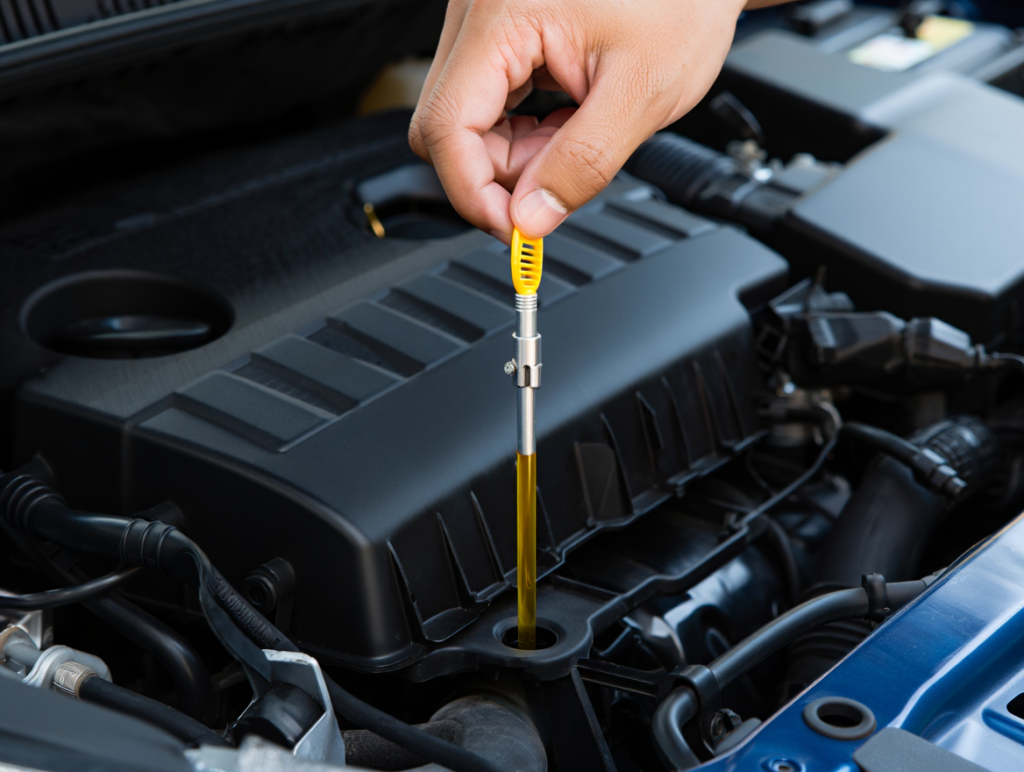
- Dark or Gritty Oil: Fresh oil is amber and translucent. Oil that appears dark, thick, or gritty indicates contamination and reduced lubricating efficiency.
- Unusual Engine Noise: Knocking, ticking, or grinding sounds may indicate low oil levels or degraded oil.
- Reduced Fuel Efficiency: Dirty or insufficient oil causes friction, forcing the engine to work harder and consume more fuel.
- Sluggish Acceleration: Increased resistance from worn or dirty oil can make the engine feel less responsive.
Example: A Honda Civic driver noticed sluggish acceleration and engine ticking. Checking the oil revealed it was overdue for a change and thick with contaminants. Replacing it restored smooth performance.
Mileage and Time Intervals
- Conventional Oil: Typically changed every 3,000–5,000 miles.
- Synthetic Oil: Usually changed every 7,500–10,000 miles.
- Time Factor: Even if mileage is low, change oil every 6–12 months to prevent degradation.
- Driving Conditions: Stop-and-go city driving, extreme temperatures, and towing require more frequent changes.
Pro Tip: Track both mileage and time since the last oil change. Many drivers rely solely on miles, but oil also deteriorates over time, especially in hot or cold climates.
How Oil Changes Extend Engine Life?
Regular oil changes aren’t just about keeping your car running—they protect your engine against wear and extend its lifespan by years.
Reducing Wear and Tear
When oil becomes dirty or degraded, friction between engine components increases. This causes metal-to-metal contact that wears down pistons, cylinders, and bearings. Fresh oil ensures a smooth protective barrier, minimizing wear.
Example: Engines in Toyota Camrys and Honda Accords that receive consistent oil changes often exceed 250,000 miles with minimal internal damage.
Preventing Sludge Buildup
Old oil breaks down and mixes with dirt and combustion byproducts, creating sludge. This sludge clogs oil passages and reduces lubrication, leading to overheating and failure. Regular oil changes flush out contaminants before they harden.
Real Case: Engines prone to sludge, like older Toyota V6 models, lasted far longer in vehicles with strict oil maintenance.
Cost vs. Savings: Why Oil Changes Are Worth It
Some drivers delay oil changes to save money, but skipping them often leads to much higher costs.
Oil Change Costs
- Conventional Oil Change: $40–$60
- Synthetic Oil Change: $70–$120
- DIY Option: $25–$50 (if you buy your own oil and filter)
Repair Costs Without Oil Changes
- Engine Overhaul: $3,000–$6,000
- Replacement Engine: $5,000–$10,000
- Increased Fuel Costs: Dirty oil reduces fuel efficiency by up to 10%, adding hundreds of dollars annually.
Pro Tip: Spending $100 on oil changes two or three times a year is far cheaper than paying thousands for engine failure.
Choosing the Right Oil for Your Car
Not all oil is the same. Using the correct grade and quality is vital for optimal performance and protection.
Oil Viscosity Explained
Viscosity refers to oil thickness, expressed as a rating (e.g., 0W-20, 5W-30). The first number with the “W” (winter rating) shows how oil flows in cold conditions. The second number shows its thickness at engine operating temperature.
Example:
- 0W-20 (Toyota, Honda, Hyundai newer models): Flows quickly in cold climates, great for modern engines.
- 10W-30 (Older cars, trucks): Thicker, suited for warmer climates or engines with higher mileage.
OEM vs. Aftermarket Oils
- OEM Recommended: Always follow the manufacturer’s oil grade and standards to maintain warranty.
- Aftermarket Brands: Choose reputable brands that meet API or ILSAC certifications. Avoid unverified oils that may not provide proper protection.
Common Oil Change Mistakes to Avoid
Even when drivers change their oil, mistakes can undermine the benefits.
Skipping the Oil Filter Replacement
Some car owners replace oil but keep the old filter. A clogged filter reduces oil circulation and traps dirt in the engine. Always replace the filter with every oil change.
Overfilling or Underfilling Oil
- Too Much Oil: Creates foam and reduces lubrication.
- Too Little Oil: Increases friction and overheating.
Use the dipstick to ensure correct levels.
Ignoring Driving Conditions
If you drive in dusty environments, extreme heat, or do a lot of short trips, your oil degrades faster. Adjust your change intervals accordingly.
Using the Wrong Oil Type
Switching from synthetic to conventional without following manufacturer recommendations can cause performance loss. Always check the owner’s manual.
DIY vs. Professional Oil Changes
Both DIY and professional oil changes have pros and cons. Knowing the differences helps you choose the best approach.
DIY Oil Changes
- Pros: Cheaper, educational, convenient if you have tools.
- Cons: Messy, requires proper disposal of old oil, risk of mistakes.
Professional Oil Changes
- Pros: Quick, includes inspections (tires, brakes, fluids), proper disposal of oil.
- Cons: Higher cost, reliance on shop scheduling.
Pro Tip: If you enjoy working on cars, DIY can save money. But for busy drivers, professional service ensures reliability.
Conclusion
Regular oil changes are the single most important step you can take to protect your engine. They reduce wear, prevent sludge, and improve fuel efficiency while saving thousands in long-term repair costs. Whether you use conventional or synthetic oil, follow manufacturer guidelines and never ignore warning signs. Avoid common mistakes, choose the right oil, and stay consistent with your maintenance schedule. By doing so, your engine can deliver peak performance and last well beyond 200,000 miles. Simply put: a small investment in oil changes ensures a lifetime of reliable driving.
FAQs
1. How often should I really change my oil?
Most modern vehicles using synthetic oil require changes every 7,500–10,000 miles. Older vehicles or those using conventional oil may need changes every 3,000–5,000 miles. Always check your owner’s manual.
2. Can I switch between conventional and synthetic oil?
Yes, but consult your manual first. Synthetic oil provides better protection and longer intervals. Many drivers upgrade from conventional to synthetic as their car ages.
3. What happens if I don’t change my oil?
Dirty oil causes sludge, friction, overheating, and eventually engine failure. Repairs can cost thousands—far more than routine oil changes.
4. Do short trips affect oil life?
Yes. Short trips prevent the engine from fully warming up, leaving condensation and fuel in the oil. This breaks it down faster, requiring more frequent changes.
5. Does oil brand really matter?
Yes. Reputable brands meet API/ILSAC standards, ensuring proper protection. Cheap, uncertified oils may not have the right additives, risking premature wear.

Benjamin Grey is an automotive engineer and writer at Car Parts Advisor. With years of experience in the automotive industry, he shares expert advice on car parts, maintenance, and repairs to help car owners keep their vehicles running smoothly.