
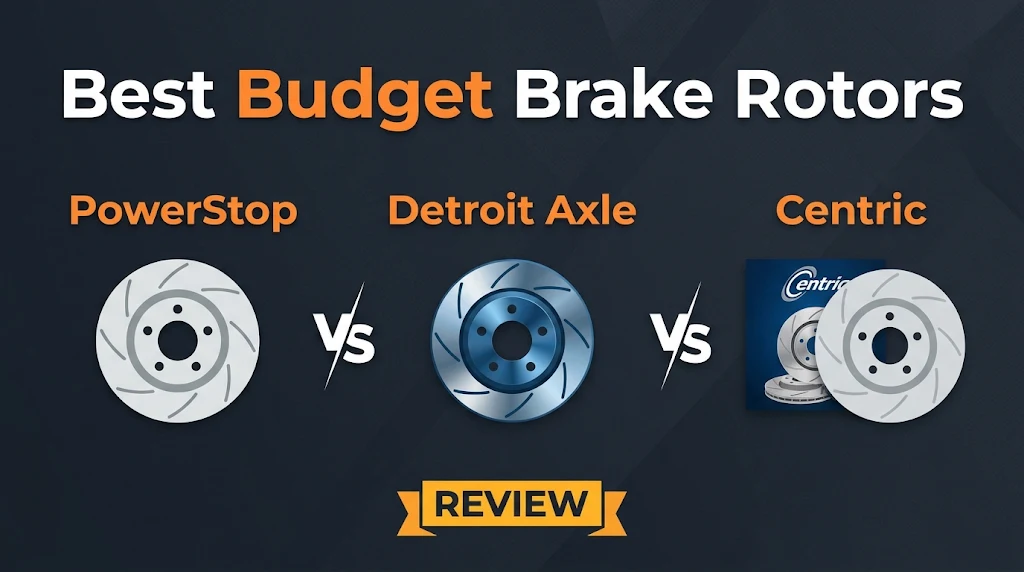
Finding out that your vehicle needs a brake job is rarely a welcome discovery. Between soaring shop labor rates and the confusing sea of aftermarket options, maintaining your braking system can feel like navigating a financial minefield. Do you overpay for dealership-branded replacement boxes, or do you roll the dice on ultra-cheap online parts that might warp, squeal, or fail prematurely?
For the budget-conscious DIYer or savvy driver, the sweet spot lies in aftermarket budget brake components. But not all budget brands are created equal. In this exhaustive comparison, we pit three titans of the affordable braking world against each other: PowerStop, Detroit Axle, and Centric.
Whether you are looking to revitalize a rusty commuter car, maximize towing safety on a budget, or achieve factory-fresh pedal feel without the dealer tax, this review will help you choose the right system for your vehicle.
Understanding Brake Rotor Value: What Makes a “Good” Budget Rotor?
Before diving into the brand matchups, it is critical to understand what separates a smart budget buy from a dangerous waste of money. Brake rotors must handle massive thermal stress, friction forces, and environmental corrosion.
Pro Tip: A “budget rotor” should never mean cheap, unvetted metallurgy. Look for ISO/TS 16949 quality certifications, proper mill-balancing to prevent high-speed steering wheel vibration, and anti-corrosion coatings that stop rust from locking up your hat and vanes.
When evaluating PowerStop, Detroit Axle, and Centric, we examine four core pillars:
-
Metallurgy & Durability: Resistance to cracking, warping, and premature wear.
-
Kit Completeness: Whether hardware, shims, or pads are bundled.
-
Corrosion Protection: E-coating, Geomet, or zinc plating versus bare cast iron.
-
Price-to-Performance Ratio: True long-term value for the dollar.
Contender 1: PowerStop – The Performance Kit King
PowerStop revolutionized the consumer aftermarket by popularizing all-in-one brake kits. Instead of forcing buyers to source pads, rotors, and hardware separately, PowerStop packages vehicle-specific combinations—most famously their Z17 Stock Replacement and Z23/Z36 Evolution Sport/Truck kits.
Key Offerings & Features
-
Drilled & Slotted Options: PowerStop’s hallmark is its cross-drilled and slot-machined rotors designed to push away gas and heat.
-
Silver Zinc Plating: Applied across performance tiers to prevent unsightly rust formation on non-friction surfaces.
-
Matched Friction Compounds: Their carbon-fiber ceramic pads are engineered specifically to match the bite characteristics of their rotors.
Pros & Cons
-
Pros: Complete bolt-on kits include everything down to high-temp lubricant and stainless steel hardware; excellent bite; specialized heavy-duty options (Z36) for trucks and tow vehicles.
-
Cons: Cross-drilled holes can act as stress risers under extreme thermal cycling and road salt exposure, occasionally leading to minor cracking in severe winter climates; higher price point than basic economy blanks.
Example: If you regularly tow a camper or drive a heavily loaded SUV through mountain passes, PowerStop’s Z36 Truck & Tow kit provides an unmistakable upgrade in heat capacity and initial bite compared to factory stock.
Contender 2: Detroit Axle – The Ultimate Price-Point Champion
Detroit Axle has grown into an online e-commerce powerhouse by offering staggering value. Known for catering directly to budget-strapped motorists searching Amazon, eBay, and direct platforms, Detroit Axle provides complete front-and-rear suspension and brake bundles at prices that often defy logic.
Key Offerings & Features
-
Aggressive Bundle Pricing: Frequently includes front and rear rotors, ceramic brake pads, hardware, and even complimentary extras like brake cleaner.
-
Extensive Coverage: Massive catalog covering virtually every make and model on North American roads, from vintage daily drivers to modern full-size trucks.
-
Coated and Drilled Variations: While they offer standard blank economy rotors, many of their most popular kits feature drilled and slotted configurations with protective zinc plating.
Pros & Cons
-
Pros: Unbeatable sticker price; highly convenient all-in-one kits for a complete vehicle overhaul; responsive customer warranty support.
-
Cons: Entry-level metallurgy can be softer, leading to faster wear or potential warping if subjected to severe heat abuse; rust protection on basic models may degrade more quickly in salty winter environments.
Pro Tip: Detroit Axle rotors are fantastic for standard daily commuters, student vehicles, or reviving a cheap beater car where spending hundreds on premium brakes makes no financial sense. Ensure you strictly follow a proper bed-in procedure to prevent uneven pad transfer.
Contender 3: Centric Parts – The Professional’s OE Choice
Centric (part of the First Brands Group) operates differently than PowerStop and Detroit Axle. Instead of flashy marketing or aggressive lifestyle bundles, Centric is heavily favored by professional technicians, autocrossers, and purists who want exact OE-spec performance or better without paying dealership markups.
Key Offerings & Features
-
Centric Premium (Black Hat) Rotors: Electro-plated with a durable black finish on the non-friction surfaces to completely eliminate hub rust.
-
High-Carbon Metallurgy (C-TEK / High Carbon Lines): Offers exceptional thermal stability and resistance to brake judder and squeal.
-
Blank & Slotted Options: Focuses heavily on precision-machined smooth blanks that mirror factory specifications for longevity and quiet operation.
Pros & Cons
-
Pros: Industry-leading metallurgy and manufacturing tolerances; exceptional resistance to warping; zero gimmicks—just pure, reliable stopping power.
-
Cons: Usually sold as individual components (rotors and pads purchased separately), requiring you to source hardware kits independently; less visually “aggressive” (no flashy drilled holes).
Example: If you drive a European sport sedan or a daily commuter where steering wheel vibration from warped rotors drives you crazy, Centric Premium rotors paired with a quality ceramic pad provide factory-grade smoothness that lasts for years.
Head-to-Head Comparison Matrix
Common Pitfalls and Mistakes to Avoid During a Budget Brake Job
Even the best budget rotors will fail prematurely if installation errors occur. Avoid these frequent missteps:
-
Skipping Rotor Cleaning: New rotors arrive coated in heavy industrial packing oil to prevent rust in transit. Failing to thoroughly scrub them down with brake cleaner and a wire brush leads directly to contaminated pads and terrifying brake slip.
-
Ignoring the Brake Bed-In Process: Slapped-on pads and rotors need a thermal transfer layer. Skipping the series of moderate 60-to-10 mph slow-downs results in uneven pad material distribution—the number one cause of “warped” rotor vibration symptoms.
-
Not Checking Slide Pins: Seized or dry caliper slide pins will cause the inner brake pad to drag constantly, overheating your new budget rotors regardless of the brand you purchased.
Frequently Asked Questions (FAQ)
Are drilled and slotted budget rotors better than plain blank rotors?
For standard daily commuting, plain blank rotors (like Centric Premium) are generally superior because they offer more mass, better heat absorption, and zero risk of stress-cracking around holes. Drilled and slotted rotors (popularized by PowerStop and Detroit Axle) excel at venting gas and water in performance or heavy towing applications, but offer little benefit for normal city driving.
Why do cheap brake rotors rust so quickly?
Economy rotors are made of raw cast iron. When exposed to moisture and road salt, surface oxidation occurs immediately. Premium budget options (like Centric Premium or coated PowerStop lines) use e-coating or Geomet finishes on the hub and cooling vanes to prevent this unsightly rust.
Is Detroit Axle safe for highway driving?
Yes. Despite their ultra-low price point, Detroit Axle parts meet strict manufacturing standards and are safely used on hundreds of thousands of daily driven vehicles across North America. However, they are designed for standard commuting, not aggressive track racing or heavy commercial payload hauling.
Should I replace my brake pads when changing rotors?
Always. Installing old, worn, or unevenly tapered brake pads onto brand-new rotors guarantees poor braking performance, excessive noise, and accelerated rotor wear. Always replace pads and rotors as an axle set.
Conclusion
Choosing the right budget brake rotor ultimately comes down to your driving profile and vehicle demands:
-
Choose Detroit Axle if your primary goal is maximizing savings on an older commuter car or tight household budget.
-
Choose PowerStop if you drive a truck, tow loads, or want a high-performance, visually striking upgrade kit bundled with matching pads.
-
Choose Centric if you prioritize long-term durability, exact OE tolerances, and silky-smooth, vibration-free daily driving.
Evaluate your budget, check your local driving conditions, and tackle your next brake job with confidence.

Benjamin Grey is an automotive engineer and writer at Car Parts Advisor. With years of experience in the automotive industry, he shares expert advice on car parts, maintenance, and repairs to help car owners keep their vehicles running smoothly.


